






Ancient Floor Traditions
Centuries ago, the bedrock of Indian social life was firmly on the ground. This wasn't due to a lack of options, but a conscious cultural embrace of floor-seating,
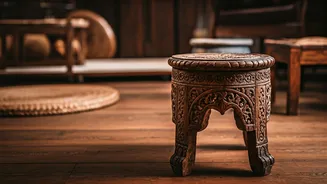
known as 'dharti' or 'zamin'. Imagine homes filled with people gathered on simple mats, low stools, or platforms like the 'patlo' and 'chowki'. While chairs as we recognize them were rare, elevated seating did exist, though it was largely reserved for specific purposes and individuals, hinting at early notions of status and hierarchy embedded even in the simplest forms of rest.
Elevated Seats' Symbolism
Even in India's ancient past, the act of sitting was imbued with deep symbolic meaning, particularly concerning power and social standing. Raised seating was not merely for comfort but served as a visible marker of authority and privilege. Thrones and specially designed seats were exclusively for rulers, religious leaders, and the elite. This practice clearly communicated who held influence and importance within society, establishing a visual language of hierarchy that permeated the social fabric. Such elevated positions underscored the separation between those in power and the general populace.
Mughal Grandeur and Thrones
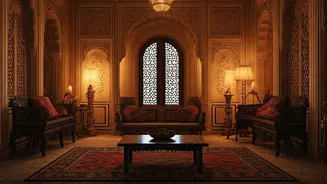
The Mughal era ushered in an era of unparalleled opulence, and this extended dramatically to their seating arrangements. Thrones and chairs became not just functional items but extravagant works of art, deeply entwined with the expression of imperial authority and immense wealth. The iconic Peacock Throne, commissioned by Emperor Shah Jahan, stands as a testament to this. Its intricate craftsmanship and precious materials were designed to awe, projecting the emperor's absolute power and sophisticated taste. These elaborate seats were central to courtly life, reinforcing the grandeur and majesty of the Mughal empire.
Colonial Chairs Arrive
The arrival of European colonizers—the Portuguese, Dutch, and British—introduced a new paradigm in Indian seating: the modern chair. These foreign visitors brought their own furniture styles and customs, which began to influence local craftsmanship. Indian artisans, with their remarkable skill, started adapting these Western designs, leading to the creation of unique Indo-European hybrid furniture. This period marked the beginning of a fusion where traditional aesthetics met foreign influences, slowly weaving chairs into the broader Indian material culture and domestic settings.
Chairs as Status Symbols
With the adoption of chairs, particularly those introduced during the colonial period, seating became a potent symbol of power dynamics within Indian society. The ability to possess and use a chair, and the type of chair one used, began to signify social standing, class, and even gender. Furniture like the 'planter's chair,' often associated with colonial administrators, overtly represented authority and control. Seating practices evolved to reflect complex hierarchies, where the simple act of sitting could communicate one's position within the caste, class, and gender structures prevalent at the time.
Modern Seating Democratized
Following India's independence, chairs experienced a profound shift towards greater accessibility and widespread adoption. What was once a symbol of exclusivity gradually became a common feature in everyday life. From the formal settings of newly established offices to the ubiquitous plastic monobloc chairs found in homes and public spaces across the nation, seating styles evolved. This transformation mirrored the nation's journey towards a more democratic, modern, and egalitarian society, where comfort and convenience became priorities for a broader segment of the population.