






A Legacy of Clay
Khurja, a town nestled a few hours from Delhi, breathes with the scent of clay and creativity. For generations, skilled artisans have honed the craft of transforming
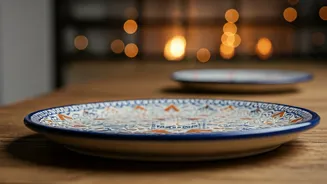
earth into exquisite ceramic pieces. This tradition, believed to have roots dating back to the 14th century, possibly introduced by Persian artisans during Timur's era and later flourishing under Mughal patronage, has earned Khurja a Geographical Indication (GI) tag. Historically, the pottery featured intricate hand-painted motifs, often in indigo or moss green on a white background, showcasing floral designs, curling creepers, and geometric patterns with a distinct human touch. This rich heritage continues to be a vital source of livelihood for thousands, with over 500 factories and nearly 25,000 people engaged in this age-old practice, ensuring its survival and evolution.
Modernizing the Palette
The spirit of Khurja pottery is evolving, embracing a contemporary aesthetic without abandoning its soulful origins. While generous curves remain a signature, silhouettes have become sleeker. Traditional vessels like 'surahis' are reimagined as minimalist carafes, and serving bowls now boast intricate patterns on their interiors, creating a striking contrast with plainer exteriors. The decorative motifs have also seen a transformation; floral designs are often enlarged to near abstraction, and geometric patterns have softened into approachable grids. The color palette has expanded dramatically beyond the traditional blues and greens. Artisans now work with sophisticated shades like charcoal, celadon, matte ivory, blush pink, and teal, often employing underglazing techniques to achieve a chalky, stone-like finish that provides a unique counterpoint to the older, high-gloss look.
Tableware for Today
The very essence of Khurja's ceramic evolution is intrinsically linked to the demands of the modern dining table. As high-end hotels and renowned chefs began commissioning bespoke tableware, the craft responded with remarkable adaptability. Plates have become wider and flatter, ideal for contemporary culinary presentations, while bowls have deepened to accommodate broths and curries designed for savoring. Furthermore, the artisans have meticulously refined the physical attributes of their creations, thinning edges, adjusting weights, and perfecting proportions. This conscious evolution allows the craft to speak the nuanced language of fine dining while steadfastly retaining its inherent earthy charm and artisanal soul, making it a preferred choice for culinary professionals.
The Artisan's Touch
At the heart of Khurja's enduring legacy are its dedicated artisans. In workshops filled with the scent of wet clay, individuals like Makam Singh, at 58, meticulously shape pasta bowls on mechanical frames. Seventy-eight-year-old Satya Prakash Dadoo, owner of Dadoo Ceramics, began his journey with just five people over five decades ago and now supplies numerous global brands. The process is a testament to skill and dedication, from preparing and shaping the white clay, to air-drying, hand-painting intricate designs based on client orders, and finally glazing them in high-temperature chambers. Even pieces rejected after stringent quality checks are often nearly flawless, underscoring the high standards maintained. While many operate on wholesale models, a few workshops, like Shehnawaz Ceramics with its century-old vintage vase, offer direct showrooms, making this centuries-old craft accessible with prices starting as low as Rs50.
Global Reach, Local Roots
Khurja's distinctive ceramics have transcended local borders, finding their way onto tables in homes, cafes, and luxury hotels worldwide. Brands and culinary experts actively seek out Khurja for its ability to deliver on both traditional forms and contemporary aesthetics. Chefs like Nitin Mathur from Taj Palace, New Delhi, appreciate how Khurja platters enhance visual appeal on buffet spreads and how its bowls complement rustic, slow-cooked dishes. Similarly, Rohit Joshi of Taj Mahal, Lucknow, notes that Khurja crockery perfectly complements the nuances of Awadhi cuisine while seamlessly integrating with modern dishes. Boutique hotel chains like Saraca Hotels & Resorts and hospitality giants like Jaypee Palace Hotel and Convention Centre, Agra, consciously choose Khurja's handcrafted pieces over imported alternatives, championing local art. The town is becoming a destination for travelers seeking authentic, artisanal treasures.