





Foundation of a Lattice
Creating a lattice pie crust is a rewarding baking skill that appears more complex than it truly is. The success lies in approaching it methodically, focusing
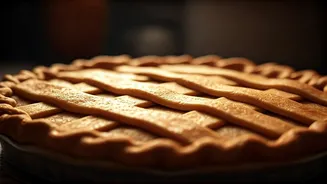
on repeatable actions, and working with a calm demeanor. The fundamental principle involves consistently cut dough strips that form a balanced and aesthetically pleasing woven pattern. By strategically folding back alternating strips, the weaving process becomes predictable and manageable. This entire technique is designed to be applied directly onto a pie that has already been filled, ensuring the lattice remains properly aligned and stable throughout the assembly. The beauty of this method is its inherent simplicity through repetition, which eliminates guesswork once you’ve completed the initial few strips. Finally, a secure crimp around the edges not only finishes the pie but also firmly anchors the lattice, preventing any movement during the baking process. This approach is ideal for any 9-inch pie, suitable for a wide range of fillings, from fruit-based to custardy desserts that benefit from an open, textured top.
Weaving the Design
To begin crafting your lattice, take your prepared pie dough, either homemade or store-bought, and roll it out to a sufficient thickness for a top crust. Utilizing a sharp pizza wheel or a pastry wheel, carefully cut the rolled dough into uniform strips. Aim for a width of approximately half an inch to three-quarters of an inch; this measurement provides an optimal balance between structural integrity and visual appeal for the final lattice. Once your strips are prepared, place them atop your filled pie, arranging 4 to 7 strips parallel to one another. Ensure these initial strips are spaced about half an inch apart, creating the foundational grid for your weave. The next crucial step involves lifting and folding back every other strip. Then, introduce a single, long perpendicular strip and lay it across the now-exposed, unfolded parallel strips. After positioning this perpendicular strip, carefully unfold the previously folded parallel strips back over it, allowing them to lie flat. Subsequently, fold back the adjacent parallel strips that lie underneath the newly placed perpendicular strip. Introduce a second perpendicular strip, placing it parallel to the first and also about half an inch away. Repeat the unfolding process for the parallel strips, laying them back over this second perpendicular strip. Continue this alternating pattern of folding and unfolding the parallel strips as you systematically add each perpendicular strip. Proceed with this process until the entire surface of the pie is covered with the interwoven lattice pattern. This systematic approach ensures a neat and uniform final product.
Finishing Touches and Tips
Once your lattice is fully woven across the pie, take a moment to trim away any excess dough that might extend beyond the pie plate's edge. This ensures a clean presentation. The vital step to secure your lattice is to firmly crimp the edges of the lattice strips to the bottom crust. This action not only seals the pie but also prevents the lattice from shifting or unraveling during baking. For an enhanced visual appeal and texture, consider sprinkling coarse sugar over the lattice before it goes into the oven, which will impart a delightful crunch and a beautiful sheen. If your dough becomes a bit too soft or sticky during the weaving process, don't hesitate to refrigerate it briefly; chilled dough is much easier to handle and cut cleanly. For an extra golden and glossy finish, a light brushing of egg wash – a mixture of one egg whisked with one tablespoon of milk or water – applied with a pastry brush before baking can work wonders. If you opt for the egg wash, you can then sprinkle coarse sugar over it for added sparkle and crunch. The spacing of your strips can be adjusted; closer spacing results in a tighter, more intricate lattice, while wider spacing creates a more open, airy design. Experimentation with these variations allows you to tailor the lattice to your personal preference and the specific pie you're creating.