





Beyond Yields: A Nutritional Leap
Conventional rice breeding, largely focused on maximizing yield during the Green Revolution, often overlooked crucial micronutrients and protein content.
Rice, a dietary cornerstone for a significant portion of India's population, typically offers minimal protein (around 6-8% in milled form) and loses vital nutrients like iron and zinc during processing. Recognizing this gap, scientists at the ICAR-National Rice Research Institute (NRRI) in Cuttack embarked on a mission to develop a rice variety that not only feeds but also nourishes. Their efforts culminated in CR Dhan 310, a biofortified rice that significantly boosts protein levels to over 10.2% in polished grains, while also enhancing digestible glutelin fractions and offering moderate zinc. This innovation represents a paradigm shift, moving beyond mere caloric intake to address the pervasive issue of "hidden hunger"— a condition marked by micronutrient deficiencies that can have long-term health consequences, particularly for vulnerable populations.
From Lab to Land
The development of CR Dhan 310 involved meticulous conventional breeding techniques. Researchers started with the established high-yielding Naveen variety, strategically enhancing its protein content without compromising desirable traits like plant structure and grain characteristics. This dedication to scientific advancement was recognized with ICAR’s Nanaji Deshmukh Award in 2018. However, translating laboratory success into widespread farmer adoption presented a significant challenge. Beyond scientific validation, building trust among farmers and ensuring market acceptance for a novel grain was paramount. This phase required bridging the gap between research institutions and the agricultural community, demonstrating the practical benefits and reliability of the new biofortified variety in real-world farming conditions.
Odisha's Tribal Terrain
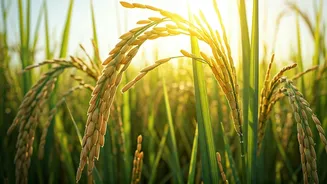
In 2025, the SAHARA organization initiated the introduction of CR Dhan 310 in five villages within Odisha's Kandhamal district, a region known for its tribal communities and challenging rainfed hill terrain. Approximately 65 farmers participated, cultivating the variety across 60 acres. While yields averaged around six quintals per acre, this was considered significant given the difficult environmental conditions. Hemanta Pradhan, one of the farmers, initially harbored doubts: concerns about his family's acceptance of the taste, traders' willingness to purchase an unfamiliar grain, and whether the enhanced protein would lead to observable health improvements. Over two cultivation seasons, witnessing the crop's resilience against dry spells and its ability to produce well-filled panicles gradually shifted his skepticism towards cautious optimism, laying the groundwork for wider adoption in similar agrarian settings.
Uttar Pradesh's Collective Approach
Eastern Uttar Pradesh adopted a more structured approach to introducing CR Dhan 310. The Prayag Samruddhi Producer Company played a pivotal role, sourcing foundation seeds from ICAR-NRRI and starting with just four farmers before expanding to 34 across various villages. Crucial to this expansion was a comprehensive strategy involving training sessions, on-field demonstrations, and the use of digital advisory tools. These initiatives were vital in building confidence among farmers who were accustomed to cultivating smaller, aromatic rice varieties. The integration of improved agronomic practices, such as the System of Rice Intensification (SRI) and Alternate Wetting and Drying (AWD), further bolstered the crop's performance. By the second season, average yields reached approximately 54.6 quintals per hectare, with some farmers achieving an impressive 78 quintals per hectare, demonstrating the variety's potential in more fertile plains.
Empowering Women Farmers
In 2022, ICAR-NRRI solidified its commitment to market integration by signing Memoranda of Understanding (MoUs) with seven Farmer-Producer Companies (FPCs) in Uttar Pradesh, focusing on seed production and commercialization. These FPCs collectively represented around 7,444 members, with a notable 57% being women. This deliberate strategy aimed to place women farmers and agri-entrepreneurs at the forefront of the value chain, ensuring their active participation and benefit. While seed production steadily increased, consumer acceptance remained a gradual process, as many consumers still preferred traditional or aromatic rice varieties. For CR Dhan 310, its true potential lies not just as plain table rice but in value-added products and institutional supplies. Applications in baby food formulations for Anganwadis, inclusion in government nutrition schemes like Poshan Kit blends, development of rice-based snacks, and utilization in school feeding programs present significant market opportunities where its higher protein content is a distinct advantage.
The Nutritional Equation
Clinical Nutritionist Sonal H Chandalia highlights that while CR Dhan 310 offers a tangible protein enhancement, the impact of processing methods on its overall nutritional profile is significant. Milling, for instance, can reduce fiber content, potentially making the glycemic index comparable to other milled cereals. Therefore, the nutritional upgrade is real, but its final benefit is modulated by how the rice is prepared and consumed. CR Dhan 310 is part of a larger biofortification movement that includes the development of rice varieties enriched with zinc and iron, alongside ongoing research into other nutrient-enhanced crops. This approach seeks to integrate nutrition directly into staple foods, transforming everyday meals into proactive health interventions, rather than treating agriculture and nutrition as separate domains. This holistic strategy aims to address deficiencies at the source, making health-conscious choices more accessible and sustainable.
A Quiet Transformation
The path to widespread acceptance for innovative agricultural products like CR Dhan 310 is invariably slow and relies heavily on building relationships and trust. Non-governmental organizations, FPCs, and farmer collectives invest considerable effort in raising awareness, conducting training, and negotiating with traders. Peer influence also plays a crucial role, as neighbors carefully observe the experiences of early adopters before committing to the new variety. Nevertheless, with each successive harvest, more households have the opportunity to taste and evaluate the grain. Discussions within FPO meetings increasingly focus on branding strategies and accessing institutional markets. Farmers begin to perceive the long-term potential beyond immediate seasonal income. For individuals like Hemanta Pradhan, the satisfaction comes from seeing robust panicles on his fields, while for Rajesh Singh Yadav, it's the hope that his cultivated grain might eventually contribute to fortified baby cereals or school snacks. CR Dhan 310 exemplifies how profound agricultural innovations often unfold not with fanfare, but through persistent efforts in building trust, effective persuasion, and patient cultivation, gradually reshaping the nutritional landscape of India's daily meals.