







Heritage Through New Eyes
Relocating to a different nation often grants a unique perspective on one's own culture, stripping away the daily familiarity to expose the inherent worth
of ingrained traditions. For many who emigrate, practices that were once commonplace, perhaps even overlooked, suddenly gain a profound significance when viewed through the prism of a foreign society. This experience of rediscovering one's roots from a distance is a shared journey for diaspora communities, often highlighting the bittersweet irony that the very treasures taken for granted at home are precisely what are celebrated as exclusive or exotic elsewhere. It's a powerful reminder that value is sometimes perceived only when seen through an external lens, prompting introspection on what we have deemed 'old-fashioned' and what has ultimately become 'gold'.
Haldi Doodh's Global Glow-Up
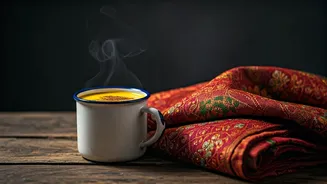
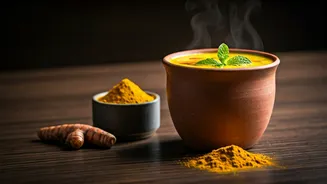
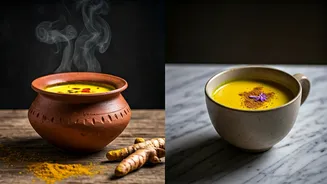
The phenomenon was brought to light by Smidha, an Indian woman residing in Australia, who shared her observations on Instagram. She vividly illustrated the stark contrast between how Indian traditions are perceived domestically versus their reception and marketing overseas. Smidha pointed to the ubiquitous 'turmeric latte,' a beverage commanding premium prices in Australian cafes. She reminisced about her childhood, recalling how 'mom used to make haldi doodh every day, which we'd run away from drinking. Same ingredients, same warmth, we just called it gross.' This personal anecdote perfectly encapsulates the core sentiment: an age-old, everyday remedy from Indian households has been repackaged as a sophisticated wellness elixir, demonstrating a significant shift in its perceived value and desirability.
Repackaged Wisdom, New Value
Smidha further elaborated on this trend, noting the disparity in appreciation for handcrafted items. She mentioned, 'In my house, there's a handmade dupatta that no one ever paid attention to. That same thing is now sold in shops here for $200.' This observation underscores a broader point: that Indian culture isn't necessarily lost to the West, but rather, its inherent value is often unrecognized by its own people until it's re-presented by external markets. The sentiment resonates deeply with many Indians abroad, who feel a sense of discomfort yet pride. The realization dawns that what was once dismissed as 'old-fashioned' is now being marketed as precious and desirable, prompting a reflection on when and why the perception of value shifts. Social media commentary echoed this, with users agreeing that external validation often highlights the treasures of one's own heritage, and that ancestral wisdom, like that of grandmothers, predates modern wellness trends.