




Geminid Shower Unveiled
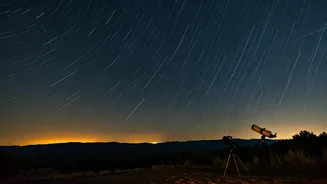
The Geminid meteor shower is active from December 4th to December 20th, with its peak activity occurring overnight on December 13th-14th. Under ideal conditions,
stargazers might witness up to 150 meteors each hour, lighting up the night sky. NASA's estimates suggest up to 120 meteors could be visible per hour during the peak. These shooting stars appear to originate from the constellation Gemini, specifically near the bright star Castor, which rises above the eastern horizon a few hours after sunset in December. Look for the yellowish glow of these meteors, best seen in the dark, moonless skies following 10 p.m. local time on the peak night, December 13th. The waning crescent moon, rising around 2 a.m. local time on December 14th, may make spotting fainter meteors more challenging. If you want to photograph the shower, it's recommended to consult guides on imaging meteor showers and consider the best cameras and lenses available. It’s also recommended to venture away from city lights, allowing 20 to 30 minutes for your eyes to adapt to the darkness.
Locating the Radiant
To fully appreciate the Geminid meteor shower, it helps to understand where the meteors appear to originate. The point from which these meteors seem to radiate is known as the radiant. In the case of the Geminids, this radiant is located within the constellation Gemini. To find this radiant, locate the bright star Castor. It’s advisable to use a smartphone astronomy app to identify Castor. Once you've located Castor, look for an area in the sky roughly 40 degrees above it. The meteor trails will appear longest here as they blaze through Earth's atmosphere. Remember, holding a clenched fist at arm's length covers approximately 10 degrees in the night sky, which is useful for estimating distances in the heavens.
Essential Viewing Tips
For an optimal viewing experience, a few simple steps can significantly enhance your chances of seeing the Geminids. Firstly, find a location away from city lights to minimize light pollution. Allow around 20 to 30 minutes for your eyes to fully adjust to the darkness. A red light can be invaluable in preserving your night vision, so consider bringing one along. Furthermore, dress warmly, particularly if observing during the December nights. Also, inform someone of your location if you choose a remote viewing spot. To capture the best images, you can consult guides on how to photograph meteor showers and consider recommendations for cameras and lenses that are suitable for astrophotography. Remember that the waning crescent moon might appear and affect the faintness of the shooting stars.