






RBI's Monetary Stance
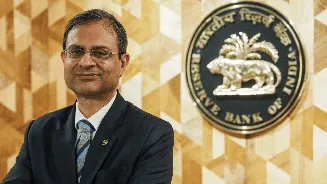
The Reserve Bank of India (RBI) has maintained its repo rate at 5.25%, signaling a steady approach to monetary policy amidst evolving economic conditions.
While keeping rates unchanged, the central bank has revised its inflation forecast for FY27 upwards to 5.1%, primarily due to rising global energy prices, increased fuel costs, and mounting input expenses. Governor Sanjay Malhotra reiterated the commitment to the 4% inflation target, emphasizing that future policy actions will be contingent on the persistence of price pressures rather than temporary shocks. The RBI also introduced measures aimed at attracting foreign capital and bolstering the rupee, including the exemption of foreign investments in government securities (G-secs) from capital gains tax. These initiatives, coupled with the robust forex reserves of $682.3 billion, provide an 11-month import cover and strengthen the nation's balance of payments, offering a degree of stability against global risks and energy price volatility. Additionally, the RBI is considering a proposal for polymer currency notes, though no decision has been made, and it has also penalized Canara Bank for KYC and account norm violations, underscoring its regulatory oversight.
Rupee Resilience & Forex Strength
The Indian rupee has demonstrated notable resilience, recently gaining 81 paise against the US dollar following the RBI's policy decision. This strengthening is attributed to enhanced foreign capital inflows and improved forex liquidity, driven by measures like the exemption of capital gains tax on foreign investments in government bonds. The country's foreign exchange reserves stand strong at $682.3 billion as of May 28, marking an increase of $938 million. This substantial reserve provides a comfortable buffer, covering approximately 11 months of import requirements. The RBI's proactive stance in attracting foreign investment aims to combat rupee depreciation and stabilize the currency amid geopolitical tensions and energy price volatility. Despite short-term fluctuations, such as a 7-paise fall to 95.83 against the dollar, the overall trend indicates a robust forex position that supports the economy's financial stability and international trade.
Energy Sector Innovations
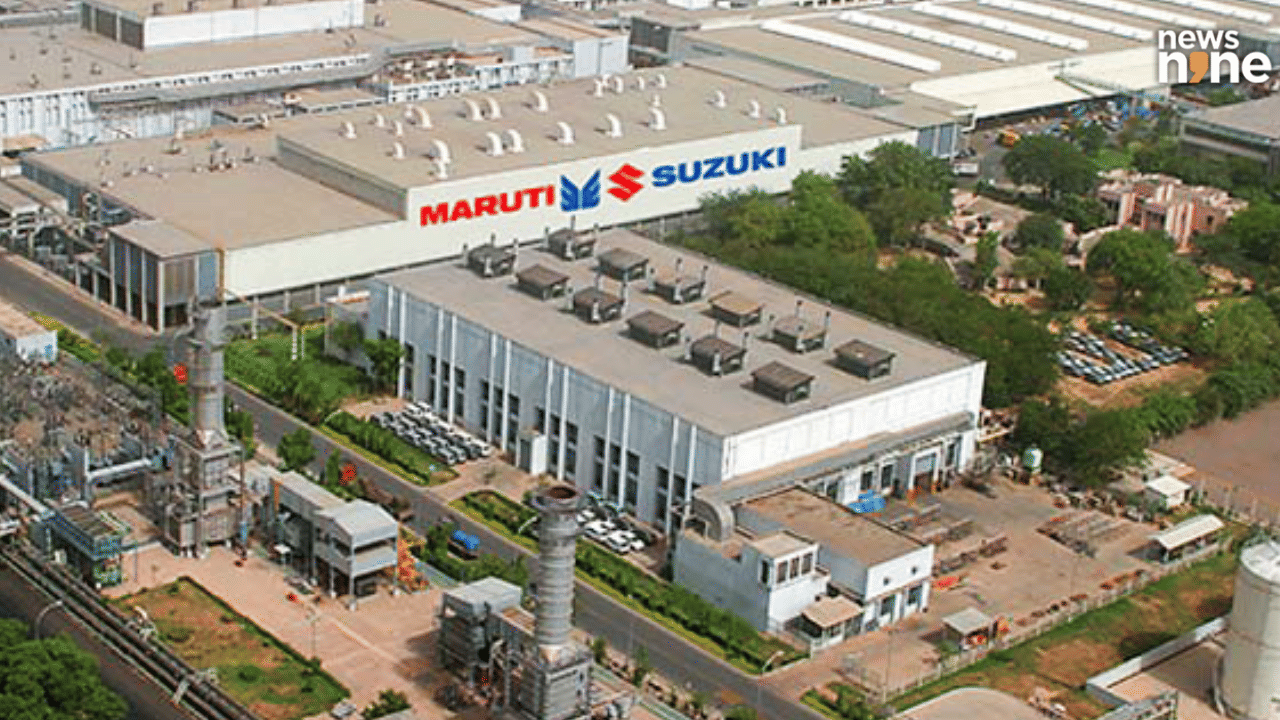
India is making significant strides in diversifying and strengthening its energy sector, with a strong focus on reducing import dependence and promoting cleaner alternatives. Maruti Suzuki is investing Rs 925 crore by FY31 in green energy initiatives, including new biogas plants, to decrease reliance on fossil fuels. The introduction of E85, a high-ethanol blend fuel for flex-fuel vehicles, accompanied by a Rs 20/litre discount, is a key step towards achieving 26% ethanol blending by 2030-31, aiming to cut both energy imports and carbon emissions. Union Minister Nitin Gadkari highlighted India's potential to become an energy exporter through ethanol, hydrogen, and sustainable aviation fuel. Oil India Ltd (OIL) has made a second natural gas discovery in the Andaman offshore region, bolstering hydrocarbon exploration. ONGC is also actively discussing energy projects, including oil exploration in the KG Basin, with state governments. Furthermore, NTPC is seeking technology partners to enable sub-critical thermal units to operate at lower loads, enhancing grid flexibility for renewable energy integration.
Manufacturing & Infrastructure Boost
The manufacturing and infrastructure sectors are experiencing a significant push through strategic investments and policy initiatives. L&T is committing Rs 18,600 crore to Tamil Nadu, launching three projects including shipyard expansion and data centers, projected to create over 8,000 jobs. IKEA India is establishing a Product Development Centre to enhance local sourcing and develop home furnishings tailored for Indian and global markets. In Maharashtra, Jabil and RSA Global are investing Rs 4,080 crore in electronics manufacturing and logistics, expected to generate 4,750 jobs. The government has formed six sector-specific groups to identify 100 products for domestic manufacturing, aiming to boost local production and reduce import dependence. Furthermore, the Uttar Pradesh Cabinet has amended its Semiconductor Policy 2024 to attract more investment in electronics manufacturing. ABB has secured a substantial order from Cochin Shipyard for electric tug systems, supporting India's Green Tug Transition Programme.
Digital Transformation & AI Adoption
India is rapidly embracing digital transformation and artificial intelligence across various sectors. The Ministry of Consumer Affairs is planning to leverage AI for machine-readable SMART standards, simplifying compliance burdens for industries and modernizing the standards ecosystem. IT Secretary S Krishnan urged the industry to seize the AI opportunity and deploy solutions across sectors like manufacturing and healthcare, emphasizing its role in economic growth. MoSPI has upgraded its data portal, making 288 government datasets AI-ready for Large Language Models (LLMs), promoting data harmonization for credible AI applications and improved public services. AI firm Innefu Labs secured $30 million in Series B funding to fuel its global expansion, deep-tech R&D, and national security AI initiatives. Perplexity AI's CEO discussed their multi-model vision for AI and the future of on-device AI, highlighting advancements in coordinating models for privacy, cost, and performance. Additionally, Vodafone Idea (Vi) has launched Silent Mobile Verification for social media platforms, offering secure, password-less digital experiences.
Sectoral Performance & Outlook
Various sectors are showcasing mixed performance and outlooks, influenced by domestic and global factors. Ind-Ra forecasts moderate cement demand growth in FY27, citing inflation and El Nino risks, with rising input costs posing challenges. The microfinance sector may see an increase in NPAs in FY27, according to CareEdge, as write-off policies normalize. Hindalco Industries aims for Rs 1,000 crore revenue from its aluminium window business by FY29, leveraging India's growing construction market. The Indian insurance market is projected to grow at 10.7% annually, driven by factors like rising life expectancy and social protection gaps. In the agri-space, Jain Irrigation and Ankur Scientific are collaborating on an agri-waste-to-energy project. Conversely, the poultry industry has slashed production by 25% due to soaring feed prices and seasonal demand drops, calling for measures like GM soybean imports. Guar seed and gum futures have seen price declines due to ample supplies and slack demand.