



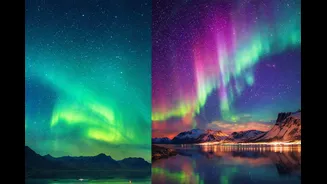
Aurora Forecast Basics
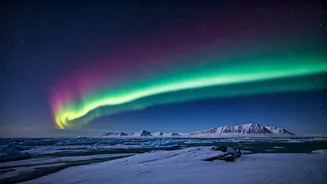
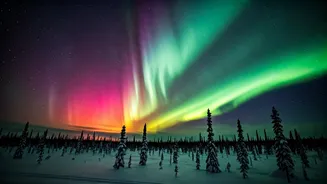
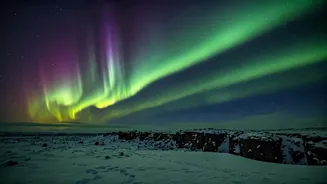
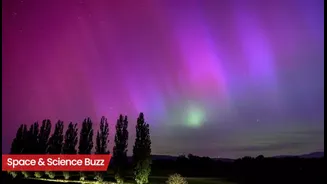
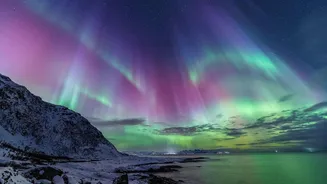
The auroras, also called the Northern Lights, are a spectacular natural phenomenon caused by charged particles from the sun interacting with the Earth's
atmosphere. Predicting their appearance involves monitoring space weather, particularly solar wind activity. Key indicators include the Kp index, a scale from 0 to 9 that reflects geomagnetic activity, with higher numbers indicating a greater likelihood of auroras visible at lower latitudes. Information from NOAA's Space Weather Prediction Center and other sources provides forecasts, detailing the chances of aurora displays and potential geomagnetic storm impacts. These forecasts regularly highlight the probability of auroras, as seen on multiple dates throughout the year, such as January 6th, and March 4th. Throughout, reports specified peak Kp index values, providing a numerical assessment of activity levels; for example, the Kp index peaked at 3 on February 25th, and a Kp index of 5 was observed over the weekend on various dates, highlighting the variability in aurora activity.
Solar Activity's Role
Solar activity, including solar flares and coronal mass ejections (CMEs), plays a crucial role in aurora occurrences. Solar flares, powerful bursts of energy from the sun, can cause unsettled conditions. CMEs, large expulsions of plasma and magnetic fields, are especially significant. When a CME strikes Earth, it can trigger geomagnetic storms, often resulting in vibrant and widespread aurora displays. Examples of CME impacts leading to aurora events include instances reported on December 9th and December 16th. The frequency of solar events and their direction towards Earth affects aurora intensity. For instance, reports from April 14th and August 25th indicated that potential solar storms or active regions might influence aurora activity. The intensity varies, as seen in the Kp index peaking at values ranging from 2 to 7 throughout the analyzed period.
Kp Index Explained
The Kp index serves as a critical tool for aurora forecasting. It quantifies the level of geomagnetic disturbance, with higher values pointing to a greater chance of viewing auroras at lower latitudes. Forecasting sources like NOAA's Space Weather Prediction Center consistently provide Kp index predictions. Several reports show peaks in the Kp index, indicating fluctuations in geomagnetic activity. For instance, the Kp index peaked at 6.67 on October 2nd, while other readings showed lower values. Monitoring the Kp index over time offers insights into the timing and strength of auroral displays. The index's role is to keep track of the influence of the solar wind. Geomagnetic storms correlate with higher Kp indices, often leading to enhanced aurora activity and opportunities for broader visibility.
Forecasting & Timing
Aurora forecasts are essential for planning aurora-viewing expeditions. The forecasts take into account the complex interplay of solar winds, the Earth's magnetic field, and other space weather factors. Organizations like NOAA provide frequent updates on auroral conditions and the probability of geomagnetic storms. The forecasts usually span over several days or a weekend. Specific dates show examples of predicted aurora activity. For instance, there were reports about good chances of auroras on January 6th, and December 25th. The forecasts often incorporate the Kp index to indicate the expected intensity of the auroras. The forecast information helps viewers prepare for optimal viewing times. Aurora predictions give insights into likely viewing times, increasing the chances of seeing the lights. Additionally, these forecasts sometimes note the possibility of extreme events such as G3 level storms.
Best Viewing Locations
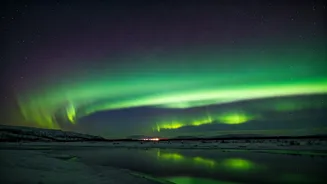
While auroras are usually seen at high latitudes, the intensity of geomagnetic activity determines their visibility at lower latitudes. During strong geomagnetic storms, auroras can be visible further south. Locations with minimal light pollution and clear skies increase the chances of a good viewing experience. In multiple instances, the reports noted that the northern lights were likely visible in certain states, e.g., in 12 states on January 9th-10th and 18 states on January 2nd-3rd. Ideal locations often include areas away from city lights, with a clear view of the northern horizon. The availability of precise forecasts helps travelers to select their destinations. The information helps viewers to choose the right locations to see the lights at their maximum splendor, helping with the perfect conditions for a memorable aurora viewing experience.
Tips for Viewing
To boost your chances of spotting the aurora, it is essential to monitor aurora forecasts and be ready for rapidly changing conditions. Find an area with dark skies and a clear view of the northern horizon. Have patience and prepare for potential delays. The ideal observing circumstances are to be located far from light pollution and with an unobstructed view of the sky. Additionally, it is helpful to use a camera to capture the auroras. The information suggests the best times for viewing. The reports from March 4th and March 25th offered a great chance of viewing the northern lights, offering suggestions of the optimal timings to catch the celestial show. Also, remember that even minor geomagnetic storms can produce noticeable aurora displays. By adhering to these tips, aurora chasers can maximize their prospects of enjoying the stunning dance of the northern lights.