

Royal Roots Revealed
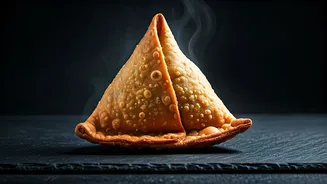
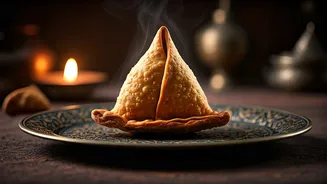
The samosa, a universally adored street food, boasts a heritage far grander than its current humble status suggests. Early culinary texts, like a Persian
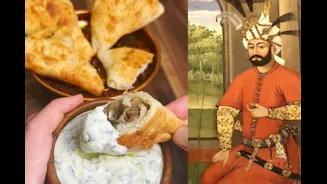
manuscript from Mandu, indicate its genesis was not as a quick snack but as an opulent dish savored in royal courts. This ancient tradition has resurfaced through a viral social media post detailing a 500-year-old samosa recipe. The manuscript itself has a storied past, having passed through the hands of influential figures such as Emperors Akbar and Tipu Sultan, before finding its home in the British Museum. Its initial appearance was within the pages of the 'Ni’matnama,' or 'Book of Delights,' compiled between 1501 and 1510 for the Sultan of Mandu, showcasing a culinary landscape distinct from our modern palate.
An Unexpected Filling
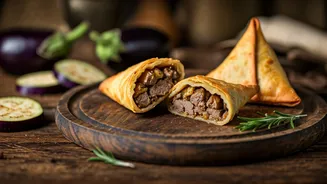
The most striking aspect of this ancient recipe is its radical difference from the samosas we recognize today. Gone is the familiar potato filling; instead, this historical rendition featured a rich mixture of roasted aubergine pulp, dried ginger, and finely minced lamb. This lamb component was sautéed with onions and garlic, culminating in a flavorful stuffing that was then fried in ghee. Notably absent from this early recipe are chillies, a key ingredient in contemporary Indian cuisine, as both potatoes and chillies were introduced to the Indian subcontinent much later. The absence of these ingredients contributed to a more complex, layered flavor profile, positioning it as a refined delicacy rather than a simple, everyday snack.
Evolution to Street Staple
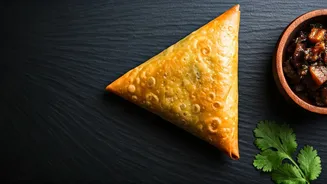
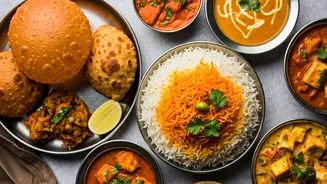
Over time, the samosa underwent a significant transformation, moving from the refined kitchens of royalty to become the accessible street food beloved by millions. As ingredients evolved and culinary practices spread beyond the confines of imperial palaces, the samosa adapted to local tastes and economies. This evolution led to its simpler, more affordable iterations, making it a ubiquitous snack found on streets across India and beyond. The journey from a rich, royal indulgence to a popular street food is a testament to its adaptability and enduring appeal, shaped by centuries of trade, migration, and changing culinary preferences.
Historical Food Connections
The revelation of this ancient samosa recipe has ignited widespread interest and conversation online, highlighting the profound connection between food, history, and culture. Many online commentators expressed surprise that such a quintessential Indian snack has roots that extend beyond India. The discussion has touched upon the migratory nature of food, with one user noting that the samosa, though widely associated with India today, can be considered an 'immigrant' dish. Conversely, some have debated its origins, with a few asserting it as an Indian invention brought back from India by Arab invaders in the 7th century. Regardless of the precise historical narrative, the samosa's journey underscores how food items are dynamic, carrying layered stories of cultural exchange and adaptation through time.