





Alpine Bounty Revealed
Venture into the Adamello Brenta Nature Park, a vast protected expanse in Trentino, Italy, renowned for its geological diversity and abundant plant life.
This area, a fusion of the limestone Brenta Dolomites and the granitic Adamello-Presanella group, offers a landscape rich with dense forests, lush pastures, and dramatic peaks. It's here that the practice of foraging thrives, with local guides like Noris Cunaccia demonstrating a profound connection to the land. She expertly identifies plants such as _pino mugo_ (mountain pine), whose young buds are transformed over years into _mugolio_, a traditional syrup used for centuries as a remedy for winter ailments and a delightful culinary ingredient, often drizzled over ice cream or paired with local cheeses. This tradition highlights a deep respect for nature's rhythms, with foragers carefully mapping areas and adhering to cycles to ensure plant regeneration, preserving the delicate ecosystem for future generations.
Bear's Chicory & More
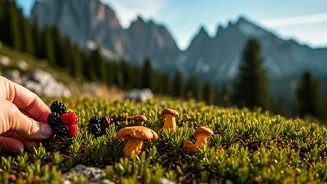
As spring melts the snows in the Brenta Dolomites, a particularly prized wild shoot emerges: _radicchio dell’orso_ (bear's chicory). This alpine blue sow-thistle, named for its legendary appeal to brown bears, is one of the first plants to appear and is rich in nutrients for local wildlife, including deer and livestock. Noris Cunaccia, deeply familiar with the local flora, shares that this plant grows at altitudes above 1,800 meters and is available for only a couple of weeks annually, with a strict personal limit of two kilograms per day for local gatherers. Its tender, slightly bitter shoots are a versatile accompaniment to various dishes, from cold cuts to meat preparations. Beyond _radicchio dell’orso_, the foraging basket can fill with other seasonal delights such as _aglio della regina_ (queen's garlic), offering a potent, truffle-like aroma, and _corniole_ (wild red berries), perfect for a palate-cleansing sorbet between courses.
Sustainable Harvesting Guide
Foraging in the Brenta Dolomites, a UNESCO World Heritage site, offers an unparalleled opportunity to connect with nature, but it demands knowledge and respect. Essential gear includes a reliable field guide for accurate plant and mushroom identification, as mistaken identity can be dangerous. Breathable containers like wicker baskets are ideal for collecting finds. Sustainable practices are paramount: always take only what you need, leave plenty for wildlife and plant regeneration, and avoid disturbing the delicate ecosystem. Familiarize yourself with local regulations, especially within protected areas where foraging might be restricted. Mushroom foraging, in particular, requires extreme caution due to the presence of poisonous look-alikes; it's highly recommended to join guided tours led by local experts who possess invaluable knowledge of the terrain and safe harvesting techniques. Embracing Leave No Trace principles ensures the preservation of this fragile mountain environment.
Culinary Creations Unveiled
The fruits of foraging in the Brenta Dolomites extend beyond the mountain paths, finding their way into exquisite culinary experiences. Noris Cunaccia, through her artisanal business Primitivizia, transforms foraged ingredients into a range of products like pestos, preserves, and oils. These delicacies are celebrated by chefs worldwide, including at the Michelin-starred Grual restaurant. Here, a tasting menu showcases the unique flavors of the region: marinated trout is paired with tuber salad and Noris's _pino mugo_, while mountain potato dishes feature wild herb pesto and a subtly sour rosehip ketchup. This culinary approach is a testament to the deep appreciation for the natural world, turning simple foraged items into sophisticated dishes that tell the story of the Dolomites. It embodies Noris's philosophy: 'Nature is a friend that needs to be discovered, layer by layer, and carefully understood,' revealing a hidden world of botanical riches.