









The Need for Speed
For decades, commercial air travel has largely remained static, a stark contrast to the rapid pace of technological progress elsewhere. The iconic Concorde,
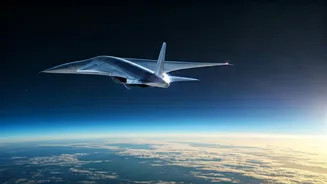
retired in 2003, once offered supersonic journeys at over twice the speed of sound, slashing transatlantic flight times. However, the dream of even faster air travel has been largely dormant for passenger flights until now. Hypersonic flight, defined as speeds exceeding Mach 5 (approximately 3,836 mph), represents the next frontier, far surpassing the capabilities of conventional jets and even reaching speeds seen in space missions and experimental aircraft like the X-15. This new era promises to redefine global connectivity, making intercontinental travel dramatically more efficient.
Japan's Hypersonic Engine Test
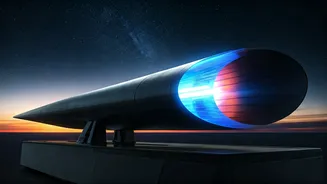
A significant stride towards realizing hypersonic passenger flight has been made by a dedicated research consortium in Japan. This collaborative effort, involving institutions such as JAXA, Waseda University, the University of Tokyo, and Keio University, successfully tested a Mach 5 engine within a controlled environment at the Japan Aerospace Exploration Agency's testing facility. The ultimate aim is to commercialize this technology by the 2040s, potentially enabling flights from Japan to the United States to be completed in an astonishing two hours. While this test marks a crucial milestone, the realization of such ambitious travel plans is still a considerable way off, requiring extensive further development and validation before passengers can board these futuristic aircraft.
Engineering Extreme Conditions
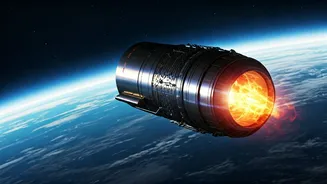
Achieving hypersonic speeds presents formidable engineering challenges. Aircraft designed for these velocities must be robust enough to withstand immense environmental pressures, including extreme temperatures reaching up to 1,832 degrees Fahrenheit and the intense forces generated by shock waves. The fundamental design of hypersonic vehicles differs significantly from that of standard commercial airliners like Boeing or Airbus. The way air flows and is utilized for propulsion at these speeds is drastically altered, necessitating specialized aerodynamic shapes and advanced material science. The recent test at Kakuda Space Center meticulously examined the aircraft's thermal protection system, its maneuverability via control surfaces, and the effectiveness of its ramjet combustion under simulated flight conditions at an altitude of roughly 15 miles, significantly higher than typical commercial flight paths.
Future Possibilities and Global Efforts
Beyond drastically reducing travel times between continents like Japan and the U.S., the development of this advanced aircraft holds even greater potential. If equipped with a rocket engine, the vehicle could theoretically ascend to the edge of space, offering a glimpse into potential future suborbital tourism or rapid global cargo delivery. The next phase of research may even involve a real-world demonstration by attaching the experimental aircraft to a sounding rocket. However, bringing this vision to full fruition is projected to take up to two decades. Meanwhile, other nations are also actively pursuing hypersonic technology. The United States, for instance, is investing heavily in military applications and fostering partnerships with private companies to advance its own hypersonic capabilities, with companies like Stratolaunch having already conducted successful test flights of reusable hypersonic vehicles like the Talon-A2, though these are currently geared towards research and not commercial passenger transport.