

Feel The Texture
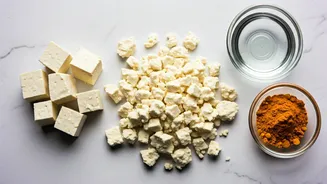
Begin by evaluating the physical feel of the paneer. When you gently press a small portion between your fingers, genuine paneer should yield with a soft,
slightly crumbly resistance. It will break apart with ease. Conversely, if the paneer feels unnaturally rubbery, possesses an overly smooth surface, or exhibits excessive stretchiness, it might be a sign of adulteration. A key indicator is when the paneer bounces back like a rubber ball rather than crumbling, suggesting it's not the real dairy product you expect.
A Quick Sniff
Before you even think about cooking, give the paneer a good sniff. Fresh, authentic paneer typically carries a subtle, pleasant, milky aroma, characteristic of good quality dairy. However, if your paneer emits a sour, overly pungent, or distinctly chemical-like odour, it could either be past its prime or, more concerningly, adulterated. In some cases, synthetic paneer might have absolutely no discernible smell at all, which is also a warning sign that warrants caution before its consumption.
The Iodine Check
A crucial test for detecting starch, a common adulterant, involves iodine. Take a small piece of paneer and boil it in some water, then allow it to cool completely. Once cooled, add a couple of drops of iodine tincture. If the paneer undergoes a colour change, turning blue or black, this strongly indicates the presence of starch, which is often added to increase the volume of fake paneer. Pure paneer will remain unaffected and will not change colour when iodine is applied.
Heating Test
Another simple yet effective method is to heat a small cube of paneer on a dry, hot pan without any oil. Pure paneer will typically emit a mild, creamy, dairy-like scent as it gently softens and releases a small amount of natural milk fat. However, if the paneer becomes rubbery upon heating, excessively oily, or emits an unpleasant odour, these are indicators that it may not be authentic. This quick kitchen experiment can reveal a lot about the paneer's true composition.
Warm Water Dissolution
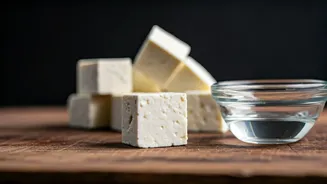
To assess how the paneer reacts to moisture, place a small piece into a bowl of warm water. Observe carefully: if the paneer begins to dissolve rapidly or leaves behind a quickly dispersing milky residue, it suggests it might be made from synthetic milk or contains other artificial additives. Genuine paneer, on the other hand, should maintain its structural integrity, remaining firm and holding its shape even after prolonged exposure to warm water.
Colour Assessment
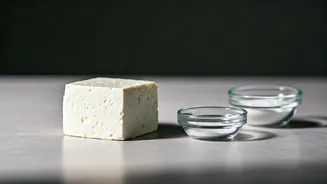
Pay close attention to the visual appearance of the paneer. High-quality, authentic paneer generally exhibits a soft, off-white or creamy hue. Be suspicious if the paneer appears unnaturally bright white, has an overly glossy sheen, or looks too 'perfect.' These characteristics could point to the addition of chemicals or whitening agents. Fresh paneer should look natural, perhaps with a slightly grainy texture, rather than appearing unnaturally glossy or plastic-like.