







Understanding Handedness Myths
Many parents express concern when their child favors their left hand for activities like drawing, often stemming from the societal norm of right-handedness.
This perception can lead to thoughts about altering a child's natural preference, not due to scientific reasoning, but because of an ingrained belief that being right-handed is inherently easier or more conventional. This often leads to suggestions from relatives or even direct attempts to train the child to use their right hand, fueled by the myth that left-handedness might cause future struggles with daily tasks, writing, or social integration. The core of this concern is built on an assumption rather than empirical evidence, creating an unfounded worry about a child's potential due to their dominant hand.
Science of Brain Lateralization
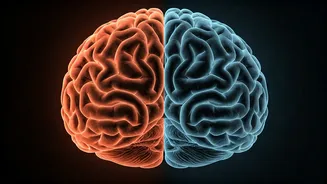
Modern scientific understanding links handedness to brain lateralization, a phenomenon where specific cognitive functions are naturally more dominant in one hemisphere of the brain. Crucially, extensive research and large-scale studies comparing cognitive abilities, academic achievements, and developmental skills have consistently shown no inherent disadvantage for individuals who are left-handed. The prevailing scientific consensus is that handedness is a natural variation in brain organization and does not predict a child's potential or performance in life. This perspective debunks the myth that left-handedness is a deficiency and asserts that it is simply a different, but equally valid, way the brain is wired.
Expert Views on Switching
Pediatric neurologists like Dr. Arif Khan advise strongly against forcing a child to change their dominant hand. He explains that such coercion can create confusion within a child's developing system, potentially impacting their writing abilities, motor coordination, and even their learning processes, attention span, and self-confidence. Dr. Khan unequivocally states that parents should not attempt to alter their child's left-handedness. For parents worried that their left-handed child might face limitations in life, it's worth noting the significant achievements of many globally renowned figures who are left-handed. This list spans diverse fields, including politics, technology, arts, and sports, featuring influential individuals such as Bill Gates, Barack Obama, Sachin Tendulkar, Rafael Nadal, and Justin Bieber.
Supporting Left-Handed Growth
With the scientific understanding confirming that left-handedness is not a problem to be fixed, the focus should shift to supporting a left-handed child's unique needs. Dr. Arif, the pediatric neurologist, emphasizes that instead of correction, parents should provide appropriate tools to facilitate natural development. This could include specialized items like smudge-resistant pens, quick-drying ink, or left-handed scissors, which are designed to make common tasks more manageable. Furthermore, parents should be aware of potential environmental challenges, such as desk positioning in classrooms. Open communication with the child about any difficulties they encounter is vital. Ultimately, the most impactful 'tool' is not physical but rather parental awareness and acceptance of their child's natural handedness.