
Kulhad Chai's Appeal
The simple kulhad chai holds a special place in Indian culture, its flavor intensified by the clay vessel. The porous nature of the kulhad plays a crucial
role. When the hot tea is poured in, the clay absorbs some of the liquid, helping to retain the temperature for longer. More importantly, it bestows a unique, earthy aroma that’s a hallmark of this beverage. The kulhad's heat retention and subtle flavor infusion together elevate a simple cup of tea into a sensory delight, which explains why it's a staple in many households and roadside stalls across India. The clay itself contributes to the flavor profile, creating a comforting and authentic experience enjoyed by millions every day.
Shahi Kulhad Phirni's Delight
Shahi kulhad phirni, a creamy rice pudding, showcases the culinary benefits of clay. The texture and flavor are significantly enhanced when served in a clay kulhad. The clay helps to keep the phirni cooler, a welcome contrast to the warmer temperatures that the Indian subcontinent experiences. The slow cooking and gentle heating process within the clay vessel contribute to a firmer texture. Moreover, the clay absorbs some of the liquid, intensifying the flavors of the creamy dessert. The phirni's rich taste is complemented by the subtle earthy notes imparted by the clay, creating a harmonious and balanced dessert experience. This combination of texture and flavor makes shahi kulhad phirni a cherished treat.
Clay Enhances Flavor
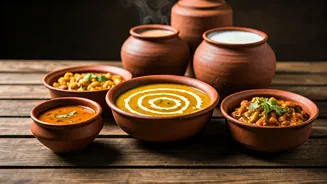
Clay pots are central to enriching the taste and texture of certain Indian dishes. The slow heating and steam circulation within clay vessels are key factors. When food is cooked in a clay pot, the heat is evenly distributed, which prevents burning and ensures thorough cooking. The steam generated during cooking also plays a crucial role; it helps retain the natural moisture and flavors of the ingredients. This gentle process allows the flavors to meld beautifully, creating a more complex and nuanced taste profile. Whether it's the aromatic biryani or the creamy phirni, the clay pot enhances the overall flavor experience by allowing the ingredients to interact in a controlled and flavorful environment.
Matka Kulfi's Richness
Matka kulfi exemplifies how a clay pot significantly impacts the quality of the dessert. The kulfi, an Indian ice cream, is traditionally served in a matka, a small, clay pot. This choice is not merely aesthetic; it also benefits the kulfi's texture and flavor. The porous nature of the clay keeps the kulfi colder for a longer time compared to other containers. The earthen material also contributes a subtle, earthy undertone that complements the richness of the kulfi, providing a refreshing taste. This classic presentation and the practical advantages of the matka continue to keep matka kulfi a popular dessert choice across the Indian subcontinent.
Dum Biryani's Charm
Dum biryani, a flavorful rice dish, owes a great deal of its unique character to slow cooking within a clay pot. The technique of dum cooking, where the dish is sealed and cooked slowly over low heat, is perfectly suited to clay pots. The clay pot's ability to retain heat and circulate steam allows for the ingredients to cook evenly and the flavors to fully meld. The slow cooking process enhances the flavors and aromas, creating a dish where each grain of rice is perfectly infused with the essence of the spices and meats. The sealed environment ensures that the dish retains its moisture, preventing dryness and contributing to its succulent texture. This is why the clay pot is instrumental in creating the delectable and aromatic dum biryani.