






Building an Orbital Powerhouse
Phantom Space is making significant strides toward establishing a dominant presence in the rapidly evolving orbital data center sector, a field already
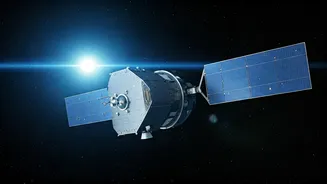
attracting major players keen to capitalize on the escalating demand for AI-driven data processing. The company has recently bolstered its capabilities by acquiring Thermal Management Technologies (TMT), a firm renowned for its expertise in spacecraft heat control systems. This acquisition addresses a critical engineering challenge inherent in operating high-performance computing platforms in the vacuum of space. This strategic move follows closely on the heels of Phantom Space's acquisition of assets from Vector Launch, a defunct small satellite launch developer, which is intended to support the development of its own Daytona rocket, slated for its inaugural flight in 2027. Phantom Space envisions a future where its independently offered satellites and launch services can be bundled into a comprehensive 'Phantom Cloud' constellation, designed to process, move, and distribute data directly from orbit. CEO Jim Cantrell noted that bringing TMT in-house is already yielding significant benefits, shaving months off development timelines and cutting costs for their planned 66-satellite constellation. This tight integration allows for real-time design iterations between thermal systems and other spacecraft components, leading to fewer integration issues, reduced mass, and a more streamlined path to operational readiness. Phantom Space is targeting a Block I demonstration mission in the latter half of 2027, involving two spacecraft launched by a third party, as a precursor to their full constellation. Once the Daytona rocket is operational, the company anticipates further improvements in the economics and speed of deploying its orbital data infrastructure.
Conquering Space Heat
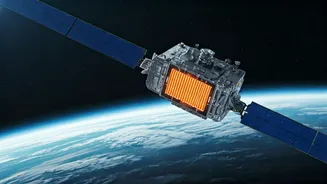
The critical challenge of managing heat in the extreme environment of space is being tackled head-on by Phantom Space through its acquisition of Thermal Management Technologies (TMT). Unlike Earth-bound data centers that rely on familiar air or liquid cooling methods, satellites must dissipate heat by radiating it into the cold expanse of space. This process becomes exponentially more complex when accommodating high-density computing payloads, such as those used for AI, which can generate tens to hundreds of kilowatts of heat. Effectively collecting, transporting, and radiating this heat without adding excessive mass or compromising the structural integrity of the spacecraft is paramount. TMT's innovative approach involves integrating thermal and structural functions into unified hardware components, promising designs that are both more compact and significantly more efficient. Phantom Space has already benefited from TMT's expertise on a previously delivered spacecraft in 2023, though specific details remain undisclosed. The company is currently seeing considerable interest in its upcoming demonstration mission, with early partnerships already established with firms like Ubotica for edge AI processing, Assured Space Access for radio-frequency communications, and Secured2 for quantum-secure data protection. Additional undisclosed collaborations with data center and industrial partners are also underway, with ongoing discussions for larger commitments that would utilize the full 66-satellite constellation.
Unique Market Positioning
As the concept of orbital data centers gains traction, Phantom Space is deliberately carving out a distinct niche for its 'Phantom Cloud' offering, differentiating itself from larger players like SpaceX and Starlink, which are primarily focused on extensive space-based computing for AI applications. Phantom Space's strategy centers on addressing the critical needs of data backhaul and edge processing, aiming to alleviate bottlenecks in the transmission and analysis of information between satellites and their end-users. 'Phantom Cloud' is conceptualized as an open orbital data platform, functioning as a distributed mesh network that provides data backhaul, edge processing, and cloud-like storage and computing capabilities directly within low Earth orbit. This accessible platform is designed to serve a diverse clientele, including government entities, commercial Earth observation operators, scientific missions, and any satellite owner seeking accelerated, low-latency data relay and enhanced on-orbit intelligence. Furthermore, Phantom Space is developing 'Galactic Sky' micro data centers, each capable of handling 10 kilowatts, which will be deployed alongside the primary 66-satellite constellation to augment the network's edge-processing power. This integrated approach, which builds upon nearly a decade of development originating from the work of its founders at Vector, aims to create a more affordable and resilient network. By controlling more aspects of its infrastructure, including satellites, thermal hardware, and eventually launch capabilities, Phantom Space intends to secure a sustainable position in this nascent market, even amidst competition from more heavily funded entities, ultimately fostering a true orbital economy where data flows and is processed in space as seamlessly as on Earth.