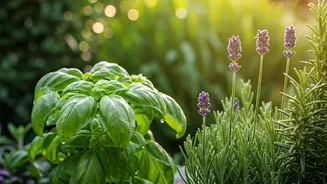








Basil: Fragrant First Defense
Basil, scientifically known as Ocimum basilicum, stands out as a formidable plant in discouraging lizards due to its distinctive aroma. This familiar herb,
a staple in Indian kitchens for its role in curries and its delightful clove-like scent, emits a fragrance that sends lizards scurrying. It thrives best when exposed to ample sunlight, making it an ideal addition to sunny windowsills or garden borders. Beyond its culinary uses, basil acts as a powerful, natural pest repellent, effectively keeping unwanted reptilian guests at bay. Its dual functionality as a flavourful ingredient and an effective deterrent solidifies its top position among lizard-repelling plants.
Garlic: The Pungent Protector
Garlic is a well-established natural remedy for warding off lizards, primarily owing to its strong, sulfurous smell. This potent odor is highly disagreeable to these reptiles, making it an effective deterrent. To implement this strategy, you can plant garlic cloves around the base of your potted plants or hang garlic braids near doorways and entry points. Cultivating garlic is remarkably simple and can be done throughout the year, ensuring a continuous supply for both culinary and pest control purposes. This method is not only cost-effective but also entirely natural, aligning perfectly with a desire for a chemical-free home environment.
Lemongrass: Citrus Shield
Lemongrass offers a strong, citrusy fragrance that lizards find extremely off-putting, acting as an invisible barrier around your home. While humans may appreciate its pleasant aroma, it serves as an effective repellent for these reptiles. It is best positioned near doors and other entryways to create a protective perimeter. Alternatively, its essential oil can be utilized to disperse its repellent scent. Lemongrass thrives in humid, warm conditions, making it well-suited for many Indian climates. As it is also edible, it represents a versatile addition to any garden, offering both a defensive function and potential culinary benefits.
Marigolds: Vibrant Deterrent
Marigolds are celebrated for their vibrant colors and their natural insect-repelling properties, thanks to a compound called pyrethrin. This natural substance found in the flowers is effective in keeping both insects and lizards away. Planting marigolds along garden borders or on window sills not only adds a cheerful splash of color to your surroundings but also serves as a protective shield against unwelcome visitors. These bright blossoms are particularly fitting for Indian celebrations, enhancing the festive atmosphere while simultaneously deterring pests. Their dual role as decorative elements and effective lizard deterrents makes them a popular choice.
Lavender: Soothing Scent, Repelling Effect
The potent and distinctive aroma of lavender, often associated with relaxation, has a surprising effect of actively repelling lizards. Many insects, and indeed lizards, find the strong scent of lavender to be highly unpleasant, causing them to avoid areas where it is present. You can deploy lavender by spraying a diluted essential oil around your home or by planting it in a sunny location. Originating from the Mediterranean region, lavender is relatively low-maintenance, making it suitable for indoor planting as well. Incorporating lavender can contribute to peaceful nights, free from the disturbance of unwanted lizard visitors.
Eucalyptus: Aromatic Barrier
Eucalyptus leaves are packed with oil glands that release a powerful aromatic scent, which is particularly detestable to lizards and most insects. To maximize its effectiveness, position potted Eucalyptus plants, often known as Nilgiri, near your home's entryways. This plant, which hails from Australia, generally grows well in balconies and requires sufficient light to flourish. By strategically placing these fragrant plants, you can transform your home into a more pleasant haven, free from the presence of lizards, enhancing your living space with a natural defense mechanism.
Rosemary: Pungent Escape Route
Rosemary's sharp and pungent fragrance acts as a natural repellent, effectively steering house lizards away from your vicinity. This aromatic herb deters lizards, ensuring they keep their distance from your home and garden. Rosemary thrives in temperatures above 10°C, making it well-suited for cooler days, especially winter. Beyond its repellent qualities, rosemary can be harvested for culinary use or blended into sprays for broader application. This European herb not only protects your home from lizards but also imparts a pleasant scent to your garden, making it an excellent choice for those seeking non-chemical solutions.
Peppermint: Minty Repellent Power
The invigorating and sharp scent of peppermint is highly effective in overwhelming the sensitive olfactory senses of lizards, prompting them to retreat quickly. Scientific studies indicate that lizards possess acute senses of smell, and such strong aromas can significantly disrupt their comfort levels. To utilize peppermint as a repellent, you can plant it in pots near windowsills or mix its leaves into water to create spray solutions for entry points. This European native plant adapts well to indoor environments with partial sunlight and also serves as a deterrent for spiders. Embrace peppermint for a refreshed home and a lizard-free experience.