
The Viral Gravitational Hoax
In today's hyper-connected world, information—and often, misinformation—can spread at an astonishing rate, much like wildfire. For centuries, tales of impending
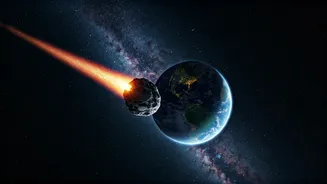
doom, whether from ancient prophecies or modern hoaxes, have captured public imagination, often serving to explain life's uncertainties or simply to grab attention. The digital age, with social media as its amplifier, has supercharged this phenomenon. Recently, a viral belief that the planet would momentarily lose its gravitational pull has resurfaced, creating a ripple of concern. This widespread fear is largely attributed to posts originating on platforms like TikTok and Instagram. One particular deleted account on these platforms claimed that on August 12, 2026, at precisely 14:33 UTC, Earth would experience a 7-second gravitational anomaly. The post further alleged that NASA was aware of this impending event, referencing a leaked document titled 'Project Anchor' with an $89 billion budget dedicated to surviving this predicted gravitational disruption. The fabricated details included predictions of massive casualties from falls, widespread infrastructure collapse, a decade-long economic downturn, and ensuing mass panic. Such claims, amplified by sharing and likes, illustrate how easily sensationalized misinformation can take root and propagate across the internet, sowing seeds of anxiety among unsuspecting audiences.
Absurd 'Science' Explained
The supposed scientific explanation for this gravitational anomaly is as fantastical as the claim itself. According to the viral posts, the scenario unfolds in a dramatic sequence: after just two seconds without gravity, objects and people would begin to float. By the three to four-second mark, they would ascend to heights of 15 to 20 meters (approximately 49 to 65 feet). The chaos would culminate at 7.3 seconds when gravity abruptly reasserts itself, causing everyone and everything to plummet back to the ground, leading to catastrophic destruction. This narrative fundamentally disregards basic principles of physics, particularly Newton's first law of motion, which deals with inertia. In a true zero-gravity environment, any initial impetus would result in only a gentle drift. The massive leaps and subsequent deadly falls described are not plausible outcomes of a temporary gravity loss. The claim seems to ignore that without a constant downward force, objects in motion would continue in that motion without immediate acceleration downwards. This fabricated 'science' highlights the tendency for sensational claims to override factual understanding, especially when presented in a visually dramatic and easily digestible format online.
NASA's Definitive Rebuttal
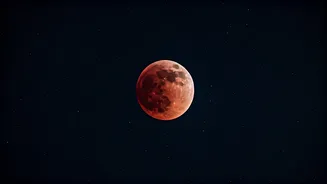
In response to the escalating concerns fueled by this viral social media narrative, NASA has officially stepped in to debunk the myth. A spokesperson for the space agency communicated directly to fact-checking organizations, unequivocally stating that the Earth will not lose its gravity on August 12, 2026. The agency emphasized that Earth's gravitational force is an intrinsic property directly linked to its mass. For gravity to be lost, the Earth's entire mass – encompassing its core, mantle, crust, oceans, and atmosphere – would need to significantly diminish, which is an impossibility under current scientific understanding. Furthermore, NASA clarified that celestial events, such as a total solar eclipse, have no discernible impact on Earth's overall gravitational pull. While the gravitational influences of the Sun and Moon do contribute to predictable tidal forces, these forces do not alter the planet's fundamental gravitational strength. The agency’s clear and concise statement serves to counteract the misinformation that has been circulating, reinforcing the scientific reality that Earth's gravity is a stable and constant force, unaffected by such fabricated events or astronomical occurrences.