





Design: Adaptable Builders
Modular robots are not just a single entity; they are constructed from interchangeable modules. These modules can connect in various ways, allowing the robot to
change its shape and function. This design gives these robots remarkable flexibility, enabling them to traverse uneven landscapes and adjust to changing conditions. The modularity also means that if a single part fails, it can be easily replaced without scrapping the entire system. This design strategy boosts the robot’s resilience, making it a viable option for extreme environments where repairs are difficult.
Terrain: Mars' Challenges
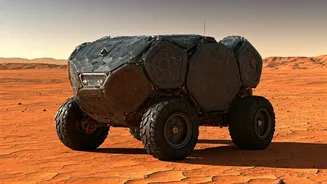
The surface of Mars is a formidable challenge for any exploration robot. The terrain varies greatly, from vast plains to towering canyons and rocky hills. The atmosphere is thin, resulting in extreme temperature swings, and the radiation levels are elevated. A modular design is ideally suited to navigate these conditions. A robot can be reconfigured for different types of terrain, for instance, forming a wider base for stability on sand or assembling into a smaller footprint to squeeze through tight spaces. The ability to adapt reduces the risks linked with any single failure and increases the odds of completing missions successfully.
Mission: Scientific Endeavors
Modular robots have a multitude of potential applications in scientific research on Mars. They can be equipped with various sensors and instruments to gather data on the planet's geology, atmosphere, and potential for past or present life. The robots can be sent to locations too dangerous or inaccessible for human explorers. They can collect rock samples, analyze the soil, and study Martian environments in a way never before possible. The flexible design also allows them to be adapted for different scientific tasks, making them useful in many different areas of Mars exploration.
Resource: Exploiting Materials
Beyond scientific inquiry, modular robots could be used to facilitate resource management and utilization on Mars. The robots can assist in locating and extracting valuable resources such as water ice, which would be essential for supporting human settlements. They may construct infrastructure like habitats, power systems, and laboratories. Their adaptable nature would be extremely important for construction projects that are difficult to anticipate in advance. By allowing the utilization of local resources, these robots can pave the way for sustainable and self-sufficient human bases on Mars, contributing to future long-term exploration efforts.
Future: Beyond Mars
The advancements in modular robotics do not just stop at Mars. The technology has potential in a range of sectors here on Earth, including search and rescue operations, construction, and disaster relief. The modular design of the robots facilitates repair and adaptation, especially in difficult or dangerous environments. As research progresses, these robots are becoming more sophisticated, autonomous, and capable of operating independently. The long-term vision is of versatile robots that can adjust to all kinds of environmental challenges, making them indispensable tools for discovery in space and solving problems on Earth.