






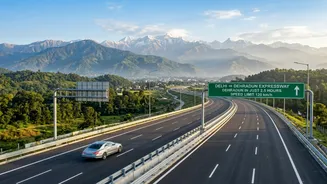
Revolutionary Travel Time
The much-anticipated Delhi-Dehradun Expressway has officially opened, marking a monumental improvement in inter-city travel. Previously, the journey between
these two vital locations could take upwards of 6.5 hours, often extending to even longer due to traffic and road conditions. However, with the inauguration of this new express corridor, commuters can now anticipate reaching their destination in a mere 2.5 hours. This substantial reduction is achieved by not only the enhanced speed capabilities of the expressway but also by a slight shortening of the overall distance, now measuring 210 km compared to the earlier 235 km. This change is poised to bring significant relief to the daily influx of commuters, a multitude of tourists flocking to the picturesque Uttarakhand region, and countless pilgrims making their way to sacred sites.
Boosting Regional Connectivity
Beyond the remarkable decrease in travel duration, the Delhi-Dehradun Expressway is engineered to significantly enhance regional connectivity. It features a direct link to the popular pilgrimage city of Haridwar, streamlining access for devotees. Furthermore, the expressway integrates seamlessly with the broader Char Dham Highway network, a crucial artery for those visiting the revered Himalayan shrines. This improved connectivity is expected to provide a substantial impetus to tourism and pilgrimage activities in Uttarakhand and its surrounding areas. Additionally, the expressway plays a vital role in alleviating traffic congestion within the National Capital Region (NCR). By diverting a considerable volume of traffic away from overburdened routes like the Delhi-Meerut Expressway and other interconnected roads, it promises to improve overall traffic flow, reduce transit delays, and ease the strain on the NCR's existing road infrastructure, making daily commutes more predictable and less stressful.
State-of-the-Art Infrastructure
This ambitious infrastructure project, with an estimated investment of ₹12,000 crore, is a testament to modern engineering and design. The Delhi-Dehradun Expressway is a meticulously planned six-lane, access-controlled corridor built to facilitate safe and efficient movement. It is designed to accommodate speeds of up to 100 kmph, a key factor in drastically cutting down travel times. The design incorporates 7 strategically positioned interchanges, ensuring smooth transitions and connectivity to various major routes and towns along its path. To maintain unimpeded traffic flow and prevent delays typically encountered at railway crossings, the expressway includes 2 dedicated railway overbridges. In total, 10 bridges have been constructed throughout the corridor, enhancing its structural integrity and capacity. The route commences near the iconic Akshardham Temple in Delhi and traverses through important towns such as Baghpat, Baraut, Muzaffarnagar, Shamli, and Saharanpur before culminating in Dehradun.
Economic and Tourism Impact
The economic implications of the Delhi-Dehradun Expressway are substantial, extending beyond just saving commuter time. This project is projected to invigorate economic activity across the region it serves. By making Uttarakhand more accessible, it is expected to significantly boost tourism, encouraging more visitors to explore the state's natural beauty and cultural heritage. This increased footfall, in turn, will support local businesses, create employment opportunities, and foster economic growth. The enhanced connectivity also strengthens the link between the National Capital and the economically vital Himalayan region, facilitating trade and commerce. Ultimately, this development represents a major step forward in improving overall connectivity, fostering economic development, and enhancing the quality of life for residents and visitors alike.