



The 'Blood Moon' Phenomenon
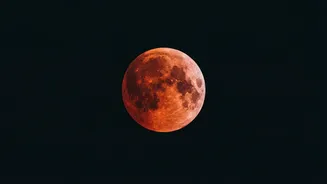
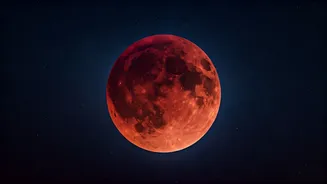
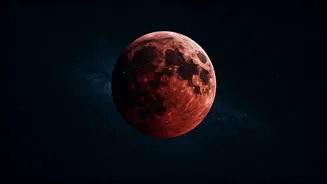
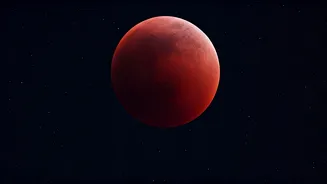
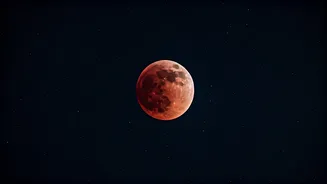
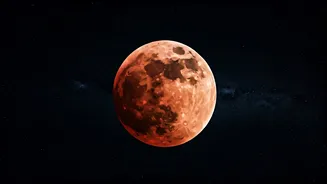
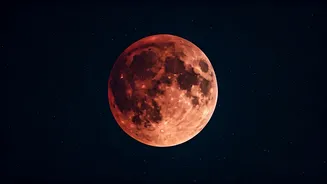
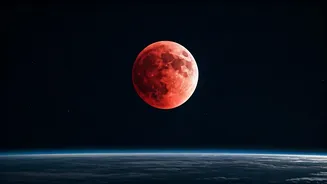
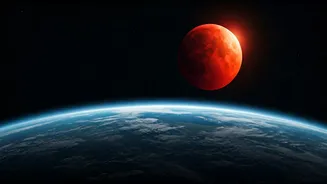
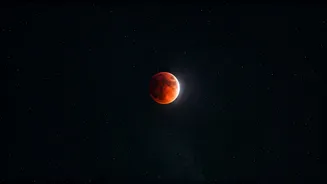
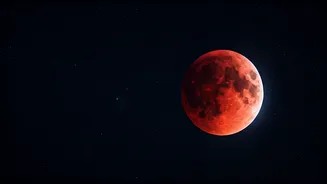
A total lunar eclipse, often referred to as a 'blood moon,' occurs when our planet, Earth, positions itself directly between the sun and the moon during
the full moon phase. This alignment causes Earth's shadow to completely obscure the lunar surface. The distinctive reddish tint, or 'blood' color, is a result of Rayleigh scattering, a phenomenon where Earth's atmosphere filters sunlight. Blue light is scattered away, allowing the longer, red wavelengths to pass through and illuminate the moon. This same atmospheric effect is responsible for the vibrant red and orange colors observed during sunrises and sunsets. The upcoming eclipse on March 3rd coincides with the full 'Worm Moon,' so named for the season when the ground thaws and earthworms become visible, signaling the arrival of spring.
Viewing the Eclipse
On March 3rd, billions of people across the Americas, Asia, and Oceania will have the opportunity to witness this extraordinary event, weather permitting. Totality, the period when the moon is fully engulfed in Earth's shadow, is expected to last for a remarkable 58 minutes. For viewers in the United States, the eclipse will commence at 3:33 a.m. EST (0833 GMT) with the penumbra, Earth's outer shadow, subtly touching the moon. The more distinct umbral shadow will begin its encroachment at 4:50 a.m. EST (0950 GMT), culminating in the start of totality at 6:04 a.m. EST (11:04 GMT). While East Coast observers might catch the initial stages before moonset, West Coast residents, including those in California, Oregon, and Washington, are best positioned to experience the entire celestial display from its early hours through dawn.
Maximizing Your View
To fully appreciate the breathtaking transformation of the moon into a 'blood moon,' consider enhancing your viewing experience. For those seeking a closer look at the lunar disk, exploring a selection of the best telescopes and binoculars designed for night sky observation can significantly improve visibility. Astrophotography enthusiasts might also want to consult guides on photographing lunar eclipses and review recommended cameras and lenses for capturing this rare event. Checking local schedules is crucial, as exact timings for the eclipse will vary based on your specific geographic location, ensuring you don't miss any part of this magnificent cosmic performance.