



A New Era of Flight
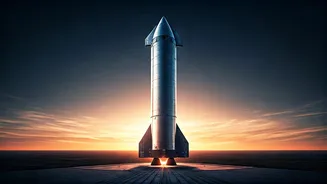
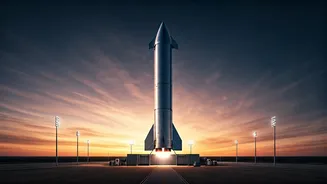
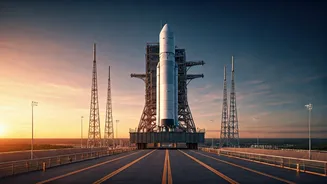
SpaceX is on the cusp of launching its most advanced rocket yet, the Starship V3, a colossal vehicle touted as the most powerful ever constructed. This
upcoming test flight, potentially scheduled for Tuesday, May 19, marks a significant milestone for the company. Beyond this single launch, the V3 is earmarked for NASA's ambitious goal of landing humans on the moon by 2028. This mission is not just another test; it's a crucial proving ground, aiming to overcome the spectacular failures that have punctuated some earlier Starship attempts. The launch window opens at 6:30 p.m. EDT from Starbase in southern Texas, promising a spectacle that extends far beyond mere liftoff, ensuring excitement from start to finish. The history of Starship is one of perseverance, marked by various challenges, including explosions on the launchpad and flights that didn't meet their objectives. However, recent flights, like the 10th in August 2025 and the 11th in October, have demonstrated progress and resilience, laying the groundwork for this next-generation vehicle.
Starship V3's Grand Debut
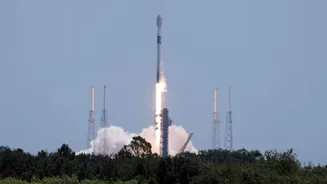
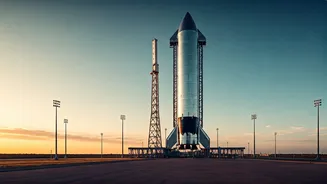
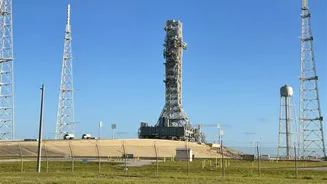
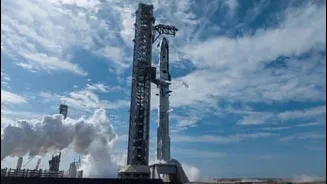
The Starship V3 represents a significant leap in aerospace design, standing an impressive 407 feet (124 meters) tall, surpassing the length of a football field and considerably taller than NASA's Space Launch System used for the Artemis II mission. This new iteration integrates a suite of advanced upgrades, most notably the new Raptor 3 engines, designed to deliver enhanced performance. It will ascend from a completely re-engineered launchpad, built to support its immense capabilities. The maiden voyage into space is envisioned as a comprehensive, hour-long suborbital trajectory. During this flight, the Starship spacecraft is slated to separate from the Super Heavy booster. The booster will then execute a controlled return for a water landing in the Gulf of Mexico. In a departure from previous recovery methods, SpaceX will not attempt a landing recovery for this initial flight of the substantially redesigned vehicle. Following the booster separation, the Starship spacecraft will deploy what are essentially simulator satellites for Starlink, mimicking the next generation of this satellite constellation. Intriguingly, two of these simulators will be used to monitor the heat shield's performance, as one tile has been deliberately removed to study aerodynamic loads on adjacent areas. The mission culminates with a planned relighting of a single Raptor engine in space, followed by a controlled ocean splashdown.
Revolutionary Enhancements
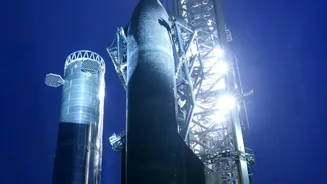
The latest iteration of the Starship system, V3, is packed with innovations. The Super Heavy booster, in its third version, features novel grid fins at its base, crucial for maintaining stability during its descent and landing phase. A completely revamped fuel transfer tube system ensures that all 33 of its powerful new engines can ignite simultaneously, maximizing thrust from the outset. The Raptor 3 engines themselves are engineered to produce more power than their predecessors. The Starship spacecraft also benefits from substantial redesigns, including an updated propulsion system that facilitates a new engine startup sequence. Furthermore, it boasts a larger fuel tank capacity and an enhanced reaction control system for superior maneuverability. The launchpad supporting this behemoth has also been upgraded, featuring increased propellant storage and more efficient pumps for faster fueling operations. These comprehensive modifications are geared towards unlocking Starship's fundamental capabilities, such as its rapid and complete reusability, the ability to transfer propellant in orbit, deploy satellites and orbital data centers, and ultimately, to transport both people and cargo to destinations as far as the Moon and Mars.
Paving the Way to the Moon
SpaceX's Starship plays a pivotal role in NASA's broader strategy for returning humans to the lunar surface. A key component of this strategy is the development of a commercial lunar lander, which NASA requires to ferry astronauts to the Moon's surface during the Artemis IV mission. SpaceX is actively developing a lunar lander variant of Starship for this purpose, facing competition from other entities. NASA's lunar exploration plan involves sending astronauts to the Moon via its Orion spacecraft, as demonstrated by the Artemis II mission. Upon reaching lunar orbit, these astronauts would rendezvous with a commercial lander. This lander would then transport them to the lunar surface and subsequently launch them back to Orion for the journey home. In the coming year, NASA plans to conduct tests of Orion docking with its potential commercial lander options in Earth's orbit. The selection of the commercial partner for the 2028 lunar surface mission will hinge on the readiness of their respective landers, a factor that could also influence NASA's own timelines, which are currently facing delays and budget challenges. Additionally, NASA is awaiting suitable spacesuits for lunar landings from another commercial provider.