




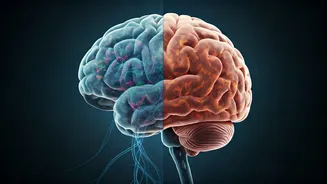

Rewinding the Brain Clock
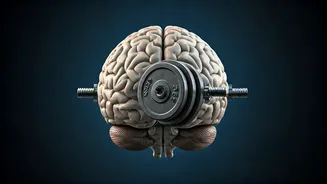
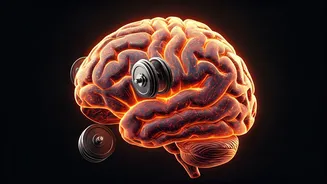
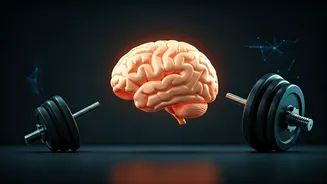
Beyond sculpting a physique, the act of lifting weights offers a remarkable benefit for your brain's aging process. Recent scientific exploration, as highlighted
by a neurologist from Apollo Hospitals in Hyderabad, suggests that engaging in consistent strength training can actually decrease your brain's perceived age by as much as two years. This implies that while the rest of your body might be subject to the natural passage of time, your neural pathways can be actively reconfigured to maintain a more youthful and agile state. The implications are significant: regular resistance exercise doesn't just contribute to physical robustness but actively works to keep your mind sharp and vigorous, offering a proactive strategy against cognitive deceleration as we age.
Cognitive Enhancement Boost
Strength training acts as a powerful stimulant for crucial cognitive functions, essentially giving your mental processing a significant upgrade. Research indicates that incorporating resistance exercises can dramatically improve your executive functions, which encompass vital skills like strategic planning, complex decision-making, and problem-solving. Furthermore, it bolsters your working memory, enabling you to hold and manipulate more information simultaneously, which is invaluable for multitasking and learning. Attention span also sees a marked improvement, helping you maintain focus and concentration even amidst a barrage of daily distractions. In essence, by consistently challenging your muscles, you're simultaneously sharpening your ability to think critically, process information efficiently, and remain attentive.
Nourishing Your Neurons
Weightlifting plays a critical role in promoting the release of key neurochemical compounds essential for brain health and longevity. Specifically, it triggers the production of Brain-Derived Neurotrophic Factor (BDNF) and Insulin-like Growth Factor 1 (IGF-1). These substances are often likened to vital nutrients for the brain, fostering neuron survival, promoting neuroplasticity—the brain's ability to adapt and form new connections—and maintaining the integrity of white matter, which is crucial for efficient neural communication. Their presence is fundamental for processes such as learning, memory formation, and the brain's overall capacity to adapt and remain resilient over time, making strength training a direct contributor to long-term cognitive well-being.
The Anti-Inflammatory Shield
Chronic inflammation within the brain, often termed neuroinflammation, poses a significant threat to cognitive function over time. Strength training provides a potent defense mechanism against this silent detriment. Resistance exercise initiates a cascade of beneficial biochemical responses within the body that effectively dampen inflammatory processes in the brain. By mitigating this inflammation, strength training helps to protect against age-related cognitive decline and the onset of conditions often associated with mental fog. This makes it a vital component of a lifestyle geared towards preserving mental clarity and ensuring sustained neurological health throughout the aging process.
Smart Training for Brains
Achieving these substantial brain-boosting benefits doesn't necessitate an extreme commitment to the gym. Neurologists emphasize that a consistent, moderate approach yields remarkable results. Aim for two to three strength training sessions per week, focusing on compound movements that engage multiple muscle groups, such as squats, deadlifts, rows, and presses. The key principle is progressive overload: ensure that your workouts continually challenge your body. If an exercise ceases to be demanding, it's time to increase the weight, repetitions, or intensity. This principle, 'If it doesn't challenge you, it doesn't change you,' applies equally to physical and cognitive improvements, underscoring the importance of consistent effort and adaptation.