


The Terafab Vision
Elon Musk has formally introduced his ambitious chip manufacturing endeavor, dubbed the Terafab, a monumental joint venture primarily between SpaceX and
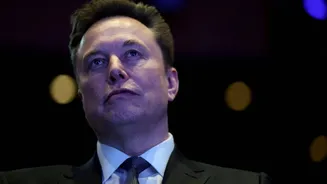
Tesla, with XAI also integrated into the fold. This initiative isn't merely about producing chips; it's about achieving a staggering goal of generating one terawatt, equivalent to one million megawatts, of compute power annually. Musk articulated this vision from a repurposed power plant in Austin, emphasizing the project's role in establishing a 'galactic civilization.' The sheer scale and complexity of building such an integrated chip manufacturing plant is, as noted by semiconductor analysts, a 'herculean' task, typically managed by specialized foundries due to the immense capital, technical expertise, and specialized equipment required. However, Musk's rationale extends beyond traditional semiconductor manufacturing; the Terafab is deemed essential for scaling up autonomous vehicles and the Optimus robot, as well as for deploying advanced compute capabilities in space. A key focus will be the development of chips specifically engineered for the rigors of space, enabling the deployment of solar-powered AI satellites.
Integrated Manufacturing & Dual Chips
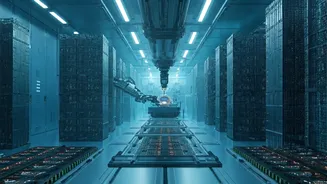
The Terafab is envisioned as a self-contained, comprehensive facility, housing all necessary equipment for the entire chip lifecycle—from initial testing and revision to full-scale manufacturing. This approach is groundbreaking, as it integrates stages of chip validation, typically conducted outside the manufacturing plant, under one roof. Musk highlighted that, to his knowledge, no other facility globally offers such an all-encompassing solution, capable of producing logic and memory chips, alongside integrated packaging, testing, mask creation, and iterative mask refinement. The Terafab will produce two distinct types of chips. The first category is designed for immediate application in Optimus robots and Tesla's autonomous vehicles. Musk specifically anticipates a significant demand for these chips for Optimus, projecting volumes to be ten to one hundred times greater than for cars. The second type of chip, designated D3, is engineered for the harsh conditions of space. These chips are crucial for Musk's plan to host AI in space, particularly on solar-powered satellites deployed in lower Earth orbit. He posits that the cost of deploying AI in space will soon become less expensive than terrestrial AI due to the constant solar power availability, making space-based AI a 'no-brainer' proposition once orbital deployment costs decrease.
Space-Based AI & Future Ambitions
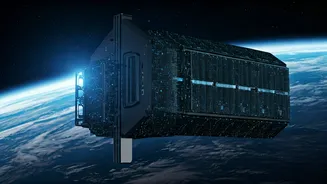
A core component of Musk's grand strategy for a distributed AI computing network involves leveraging space. He unveiled a conceptual design for miniature AI satellites, each equipped with solar arrays capable of delivering 100 KW of power. Musk projects that these satellites will evolve to achieve megawatt power capacities in the future. This move into space-based AI is partly driven by the public's potential reluctance to host large AI computing centers nearby. Furthermore, Musk's long-term vision extends to establishing an industrial infrastructure on the Moon. This lunar base would enable the creation of petawatts of AI compute—a scale a thousand times greater than a single terawatt. He also playfully mused about a future post-scarcity economy that could offer free trips to Saturn, acknowledging the seemingly outlandish nature of his 'abundance' proposals, drawing a parallel to the movie 'Idiocracy'.