





Ambitious Space Visions
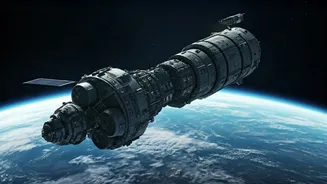
The space sector harbors grand aspirations for the near future, envisioning vast networks of hundreds of thousands, even millions, of satellites. These
celestial bodies are intended to provide global internet access to underserved regions, facilitate orbital data processing, and even generate solar power. This ambitious trajectory, widely anticipated within the industry to become a reality, is a significant source of concern for atmospheric researchers who are beginning to observe tangible effects on our planet's atmosphere. The proliferation of these satellite networks, driven by commercial interests and technological advancements, is pushing the boundaries of what is currently understood about the impact of human activity on Earth's delicate atmospheric balance.
Pollution's Stratospheric Rise
Since the advent of megaconstellations in 2020, scientific studies indicate a notable increase in potentially harmful air pollutants at high altitudes. These pollutants stem directly from the launch and re-entry phases of numerous satellites. Conservative estimates suggest that by 2030, the global space sector could be responsible for releasing more climate-altering chemicals into the atmosphere than the entire United Kingdom currently does. Eloise Marais, a professor at University College London specializing in atmospheric chemistry and air quality, explains that if the space industry's growth projections are realized, this concentrated upper-atmosphere pollution will inevitably begin to influence Earth's climate. She likens this situation to a small-scale, uncontrolled geoengineering trial, fraught with the potential for unforeseen and severe environmental repercussions.
Geoengineering's Shadow
Geoengineering encompasses various proposed interventions designed to counteract the warming effects of rising greenhouse gas concentrations. One prominent method, Stratospheric Aerosol Injection, involves dispersing light-reflecting particles into the stratosphere to reduce incoming solar radiation. While under scientific scrutiny, this technique carries warnings of unpredictable outcomes, including altered rainfall patterns, droughts, and other unforeseen weather shifts. Marais's research team is actively investigating the atmospheric effects of satellite-related pollution, with their latest findings indicating that by 2029, pollution from megaconstellation launches, including those from Starlink, Amazon LEO, and Chinese projects Guowang and Quianfan, will constitute over 40 percent of all space sector-generated pollution.
The Cycle of Frequent Launches
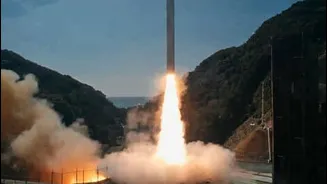
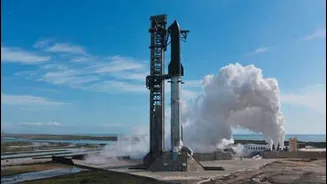
Megaconstellations, primarily deployed to deliver internet services to remote areas from low Earth orbit, represent a rapidly expanding segment of the space industry. These systems rely on satellites with relatively short operational lifespans, typically replaced every five years with more advanced technology. This constant cycle of launching new satellites and deorbiting older ones, a stark contrast to traditional long-duration space missions, directly leads to increased air pollution injected into the otherwise pristine upper atmosphere. A significant portion of these launches utilizes kerosene-fueled rockets, such as the Falcon 9, which produce black carbon. This particular pollutant, when released at high altitudes, persists for approximately 2.5 to 3 years and possesses a climate impact roughly 540 times greater than black carbon emissions from surface-level sources like ships, cars, and power plants.
Pollutants and Their Impact
Researchers estimate the atmospheric impact of rocket launches by quantifying the expected pollution from satellite launches and re-entries. While launches primarily emit warming black carbon, satellite re-entries generate aluminum oxides, which can deplete the ozone layer. Climate models are then employed to predict the consequences of these pollutants on the planet. Marais highlights that these models can accurately forecast ozone depletion and climate alteration. She further notes that their latest simulations used conservative figures, as the actual growth in satellite numbers has consistently surpassed initial expectations, underscoring the urgency of the situation.
Growing Satellite Numbers
Currently, over 15,000 active satellites are in orbit, a threefold increase compared to previous years, largely due to SpaceX's Starlink constellation, which alone comprises more than 10,000 satellites. Emerging players like Amazon LEO and Chinese operators Guawang and Qianfan are actively developing their own satellite fleets. Projections indicate that by 2030, these constellations could number in the hundreds of thousands, with continued exponential growth anticipated in the coming decades. This unregulated expansion raises serious concerns, as the accumulation of pollutants in the upper atmosphere is likely to reach levels that will significantly affect Earth's climate.
Call for Regulation and Research
While current pollutant concentrations from satellite launches and re-entries are estimated to be about one-hundredth of the quantity needed for significant geoengineering effects by 2029, the continuous increase in satellite deployments presents a growing concern. Marais emphasizes the critical need to address the pollution generated by launches and re-entries with greater seriousness and implement robust regulations. She also stresses the necessity for increased funding dedicated to research, as the scientific community struggles to keep pace with the rapid advancements and expansion of the space industry. The study detailing these findings was published in the journal Earth's Future.