







Nature-Inspired Wing Design
Traditional aircraft wings are engineered with a compromise between the lift required for takeoff and the efficiency needed for cruising. However, a groundbreaking
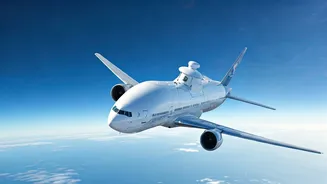
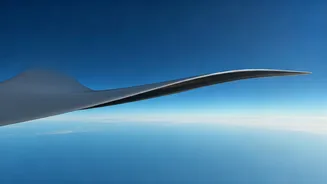
advancement from German engineers aims to eliminate this trade-off by developing wings that can continuously adapt their form during flight, much like a bird adjusts its wings to changing air currents. This novel approach, dubbed Hyperelastic Trailing Edge Morphing (HyTEM), utilizes fiber-reinforced composite materials that allow for seamless shape alterations across the entire wingspan. The system incorporates ten strategically placed actuators that enable these smooth deformations without the need for complex mechanical linkages or disruptive gaps. The potential benefits are substantial, including significant reductions in aerodynamic drag, airborne noise pollution, overall aircraft weight, and the demands of ongoing maintenance, all while optimizing lift generation across various flight phases. While independent verification is still pending, the concept itself marks a significant leap forward in adaptive aerospace technology.
AI-Driven Flight Control
The intelligence behind these dynamic wing transformations is an advanced AI-assisted flight control system. This sophisticated system continuously monitors the aircraft's flight environment, detecting anomalies such as turbulence or potential structural damage in real-time. Utilizing adaptive algorithms, it intelligently redistributes commands to the wing actuators, effectively reshaping the wing to counteract disturbances or compensate for unexpected issues. This mirrors how a smartphone automatically adjusts screen brightness based on ambient light, but applied to complex aerodynamic surfaces. The pressure sensing capabilities are so refined that they can reconstruct the full wing's aerodynamic behavior from just a few data points. This proactive approach to stability control offers a substantial advantage over conventional systems, which typically react only after a problem has already manifested, potentially leading to a safer and more stable flight experience.
Proven Commercial Viability
The commercial appeal and practical benefits of adaptive wing technology are not merely theoretical; they have been substantiated through rigorous testing. NASA, in collaboration with external partners, conducted trials under its ACTE project, focusing on flexible trailing-edge technologies. These extensive tests, performed at NASA's Armstrong Center, successfully demonstrated tangible advantages. The validated outcomes included measurable improvements in fuel economy, a notable decrease in noise levels during flight operations, and the realization of lighter aircraft structures. Crucially, the flexibility of this technology means it can be retrofitted onto existing wing designs. This adaptability suggests that future advancements in flight efficiency and noise reduction could be implemented without necessitating the complete redesign of entire aircraft fleets, accelerating the adoption of these beneficial innovations.
Future of Air Mobility
While the integration of morphing wings into large-scale commercial passenger jets might still be some years away, the immediate future is exceptionally promising for drone manufacturers and companies developing urban air mobility solutions. These sectors are keenly observing and actively considering the adoption of this advanced technology. The next phase will likely involve further demonstration flights designed to prove the scalability of morphing wing systems. Once proven effective and adaptable for smaller unmanned aerial vehicles and air taxis, the technology can then be progressively applied to larger aircraft. Consequently, the delivery drones and air taxis that populate our future skies are expected to operate with significantly enhanced efficiency and reduced noise footprints, thanks to wings that dynamically adjust their shape, mirroring the efficiency found in nature.