





Choosing the Right Container
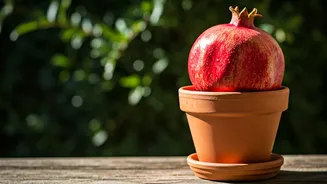
Embarking on your pomegranate-growing journey begins with selecting the ideal home for your plant. Opt for a pot that offers ample room for root development,
ideally measuring between 16 to 20 inches in both width and depth. Materials like terracotta, ceramic, or robust plastic are suitable choices, but the most critical feature is ensuring excellent drainage. Pots with well-designed drainage holes are paramount to prevent water from accumulating at the roots, which can lead to detrimental root rot and hinder your plant's health and fruit production.
Crafting Ideal Soil
The foundation for a thriving pomegranate plant lies in its soil. A well-balanced mix is essential to provide both the necessary moisture retention and effective drainage. Create a custom blend by combining equal parts of garden soil, nutrient-rich organic compost, and either coarse sand or coco peat. This combination ensures that excess water can escape freely while still holding enough moisture to keep the plant hydrated between waterings. The organic compost acts as a continuous source of vital nutrients, fostering robust growth and encouraging a bountiful harvest.
Planting with Care
Gentle handling during the planting process is key to helping your pomegranate establish itself comfortably. Before adding soil, place a layer of small stones at the bottom of your chosen pot. This prevents the drainage holes from becoming clogged, maintaining optimal aeration. Fill the pot about halfway with your prepared soil mix. Carefully position the young pomegranate plant upright in the center, ensuring its roots are spread naturally. Continue filling the pot with soil, adding it gently without compacting it too firmly around the base. After planting, water the soil thoroughly to help the roots settle and establish a firm connection with their new environment.
Sunlight Requirements
Pomegranates are sun-loving plants and require a generous amount of light to flourish and produce fruit. Aim to place your potted tree in a location that receives at least six to eight hours of direct sunlight each day. Balconies that face south or open terraces typically offer the ideal conditions for maximum sun exposure. To promote even growth and encourage fruiting on all sides of the plant, remember to rotate the pot periodically. This simple action ensures that every part of the plant receives consistent light, leading to a healthier, more productive specimen.
Watering Wisely
Effective watering is crucial for the health and fruit quality of your potted pomegranate. The golden rule is to water only when the top inch of the soil feels dry to the touch. Your plant's water needs will fluctuate with the seasons; it will likely require more frequent watering during the hot summer months and less during the monsoon or rainy season. It's vital to avoid overwatering, as excessive moisture can be detrimental to the root system. Maintaining consistent and appropriate moisture levels, especially when the plant is flowering and developing fruit, is directly linked to the production of high-quality, juicy pomegranates.
Feeding for Fruit
To ensure your pomegranate plant thrives and produces a generous yield of delicious fruit, regular feeding is essential. Incorporate organic compost or a balanced, all-purpose fertilizer into your plant's routine every three to four weeks. This regular nourishment strengthens the plant's branches and stimulates abundant flowering, which is the precursor to fruit. Be mindful of over-fertilizing with nitrogen-rich compounds, as this can lead to excessive leafy growth at the expense of fruit development. A balanced approach to feeding will encourage both strong vegetative growth and prolific fruiting.
Ongoing Care and Maintenance
Consistent, attentive care is the cornerstone of keeping your potted pomegranate plant healthy and productive for years to come. Regularly inspect the foliage for any signs of common pests such as aphids or mealybugs and address them promptly. Pruning away any dry or damaged branches will help maintain the plant's shape and health. During periods of colder weather, consider moving your potted plant to a slightly warmer, more sheltered location to protect it from frost. With this diligent attention and care, your urban pomegranate tree can continue to offer the delight of homegrown, juicy fruits season after season.