






A Travel Influencer's Experience
In December, Indian travel influencer Sachin Awasthi and his wife arrived at Jeju Island expecting a serene escape filled with natural wonders. However,
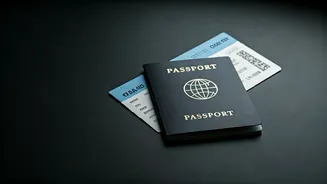
their anticipated holiday took an abrupt turn, culminating in detention and subsequent deportation. This incident has since amplified discussions among Indian travelers concerning South Korea's visa regulations and the unique status of Jeju Island. While Jeju Island is often promoted as a destination accessible to Indian passport holders without a prior visa, Awasthi's experience serves as a stark reminder that visa-free entry does not equate to an assured passage. He maintained that he had meticulously reviewed official guidelines and believed that direct entry to Jeju was permissible without requiring a visa for mainland South Korea. Furthermore, he asserted that he had all necessary supporting documents, including return tickets, hotel reservations, and travel insurance, backed by a robust travel history. Despite these preparations, the ordeal began even before reaching Jeju, with airline staff at Bangkok airport reportedly requesting physical cash as proof of funds, a requirement not always clearly stipulated in general visa-free travel summaries, rather than accepting digital financial statements.
Jeju's Special Status Explained
Jeju Island operates under a unique administrative designation: the Jeju Special Self-Governing Province. This status was established to bolster tourism and economic development within the region. To facilitate this objective, Jeju offers a select visa-waiver program for citizens of various countries, including India. This program allows for entry into Jeju without a mainland South Korean visa, provided specific conditions are met. Crucially, travelers must arrive directly on international flights to Jeju and must not intend to travel onward to mainland South Korea. The most vital stipulation, however, is that immigration officers must be satisfied with the traveler's documentation and stated intent. While this visa-free arrangement simplifies pre-departure procedures by reducing paperwork, it does not eliminate the discretionary authority of immigration officials at the point of entry. Although the majority of international visitors have been permitted visa-free entry to Jeju since June 2022, there remain exceptions that can lead to entry refusal.
Reasons for Entry Denial
Even when traveling under a visa-free arrangement, immigration officers retain the prerogative to assess several factors before granting entry. These assessments typically include the clarity of the traveler's stated purpose for visiting, their demonstrated financial capacity to support their stay, the perceived risk of overstaying their welcome, their previous travel history, and the consistency of their provided documentation. In recent times, there have been instances where individuals have attempted to use Jeju as a transit point to enter mainland South Korea and subsequently overstay, leading to increased scrutiny in certain cases. Awasthi himself later noted anecdotal reports suggesting that Indian travelers might face more rigorous questioning due to past instances of the visa-free route being misused. While no official blanket ban exists, the immigration officers' discretion remains absolute in determining entry. This means that even with seemingly complete documentation, a subjective assessment can still result in a denial of entry.
The Airline's Role
A crucial aspect often overlooked by travelers pertains to airline regulations. Under international aviation rules, specifically those governed by bodies like IATA, airlines are obligated to repatriate any passenger who is denied entry into a country. This financial liability for airlines can sometimes prompt them to implement stricter checks at the departure gate, even for visa-free destinations. These checks might include demands for proof of sufficient funds in physical cash, a requirement that can catch travelers by surprise as it's not always clearly communicated in general travel advisories. The airline's concern is to avoid the expense and logistical hassle of returning a denied passenger. Consequently, an airline's internal screening process, driven by these regulations, can sometimes be more stringent than the official immigration requirements, leading to unexpected hurdles for travelers even before they depart.
Visa vs. Visa-Free Dilemma
For Indian travelers contemplating a trip to Jeju Island, the choice between relying on the visa-free policy or obtaining a pre-approved mainland South Korea tourist visa hinges on their personal risk tolerance. The visa-free option offers the advantage of no advance paperwork, allowing for quicker booking decisions and generally a lower upfront cost. This can be appealing for spontaneous travel plans or budget-conscious trips. On the other hand, opting for a pre-approved mainland tourist visa involves more extensive documentation, an application fee, and a processing time. However, it provides a greater degree of certainty at immigration, potentially avoiding the subjective assessments that can occur with visa-free entry. For those planning expensive international vacations, the predictability and assured entry offered by a standard South Korea tourist visa might be preferable to the uncertainty inherent in an on-arrival discretionary process, thereby mitigating potential travel disruptions.
New Guidelines for Tourists
As global tourism experiences a resurgence, Jeju Island is proactively implementing new guidelines to manage overtourism and ensure visitors respect local customs. The island, like many popular global destinations, faces challenges stemming from disruptive tourist behavior, which has led to growing concerns among residents. In response to these local complaints, the Jeju police have launched a groundbreaking multilingual etiquette initiative, reportedly the first of its kind in South Korea. These notices, printed in Korean, English, and Chinese, are distributed widely, aiming to bridge language and cultural divides and educate visitors on community standards. The initiative seeks to prevent misunderstandings arising from cultural differences and enhance foreigners' comprehension of Korean culture and laws. The guide specifically outlines prohibited behaviors that, if repeated, can result in fines of up to 200,000 won (approximately ₹12,000). These include actions such as littering, graffiti, jaywalking, disorderly conduct, smoking in restricted areas, ignoring traffic rules, dine-and-dash, trespassing, public urination, carrying weapons, and disturbing the peace.