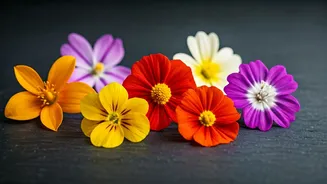






Parijat's Subtle Charm
The delicate Parijat, also known as Sewali, is a gem in Northeast Indian cuisine. Its petals, rich in vitamins A, C, and E, possess noteworthy anti-inflammatory
properties, offering relief from colds and flu. Traditionally, these subtle-tasting petals are incorporated into light curries, vegetable stir-fries (sabzis), and even fresh salads, demonstrating a harmonious blend of gentle flavour and significant health advantages. The Parijat flower is a testament to the nuanced use of floral ingredients in enhancing everyday meals.
Marigold's Antioxidant Punch
Marigold petals are a visual delight and a nutritional powerhouse, brimming with antioxidants and carotenoids. These compounds are crucial for maintaining good eye health and aiding digestion, while also offering anti-inflammatory benefits. Their mildly citrusy profile makes them an excellent addition to salads and desserts, effortlessly uplifting their taste. Beyond their culinary appeal, marigolds actively contribute to the body's well-being, making them a dual-purpose ingredient in the kitchen.
Jasmine's Fragrant Calm
While renowned for its captivating aroma, Jasmine offers more than just sensory pleasure. Its inherent calming properties are beneficial in reducing stress, and its antioxidant content supports robust immunity and healthy skin. In traditional practices, Jasmine flowers are frequently infused into teas or incorporated into sweet dishes and desserts. This infusion imparts a soothing, fragrant essence, transforming beverages and meals into calming, aromatic experiences that nourish both body and spirit.
Moringa's Nutrient Boost
Moringa flowers present a mild flavour that seamlessly integrates into a variety of dishes. They can be readily added to curries, stir-fries, or simply sautéed for a quick side. These flowers are packed with essential vitamins like A, B, and C, along with vital minerals such as calcium and potassium. Their recognized anti-inflammatory and immunity-boosting capabilities help combat infections and promote strong bones and healthy skin, making them a valuable, nutrient-dense addition to any meal.
Hibiscus for Heart Health
Hibiscus stands out as a remarkable source of vitamin C, iron, and potent antioxidants. It is celebrated for its positive impact on heart health, its ability to help lower blood pressure, and its support for liver function. The flower's distinct tart flavour makes it exceptionally versatile, perfect for brewing refreshing teas, crafting vibrant sharbats, or making delightful jams. Each sip and bite offers a combination of invigorating taste and nourishing benefits.
Mustard's Zesty Kick
A popular ingredient in Bengali cuisine, Mustard flowers bring a unique slightly bitter-sweet taste to dishes. They are wonderfully suited for stir-fries, vegetable preparations (sabzis), and creating crispy, flavourful fritters, offering a delightful balance of health and taste. Rich in antioxidants and vitamin C, these flowers play a role in bolstering the immune system and warding off common seasonal ailments, adding a healthful zest to traditional cooking.
Pumpkin's Wholesome Touch
Pumpkin flowers are generously endowed with vitamins A and C, alongside calcium and dietary fibre. These nutrients are instrumental in supporting optimal eye health and promoting efficient digestion. Furthermore, their low-calorie profile makes them a beneficial component for weight management efforts. Whether they are expertly stuffed, delicately fried, or simmered in curries, pumpkin flowers introduce a subtle, pleasant flavour and a significant nutritional uplift to your culinary creations.