




Pioneering Space Computing
The future of advanced artificial intelligence, particularly large language models (LLMs), might soon be forged beyond Earth's atmosphere. A significant
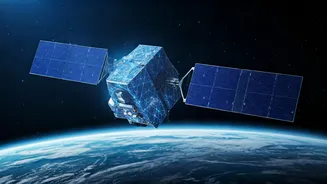
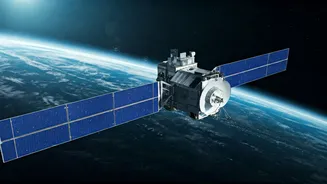
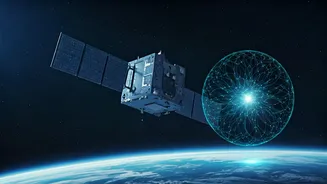
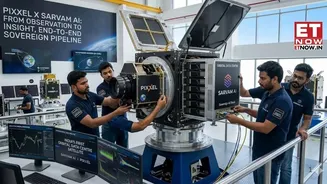
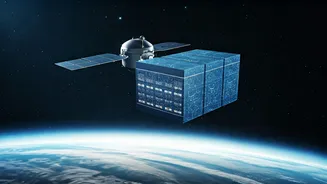
stride in this direction is the impending launch of India's inaugural orbital data center satellite, aptly named 'The Pathfinder'. This ambitious project is the result of a strategic partnership between Pixxel, a burgeoning space-tech startup, and Sarvam AI, a prominent provider of LLM solutions. The goal is to usher in an era where sophisticated AI models can be trained and deployed directly in orbit, a move that could redefine the landscape of artificial intelligence development. Expected to be operational by the close of 2026, this 200-kilogram satellite is engineered to house powerful Graphics Processing Units (GPUs), the essential hardware for both the training and inference phases of Sarvam's AI models. Unlike traditional satellite computing, which typically employs low-power processors optimized for survival in the harsh space environment, 'The Pathfinder' is designed to replicate the high-performance capabilities of on-ground data centers, bringing cutting-edge AI computation to space.
Addressing Earth's Limits
The drive towards space-based computing is largely motivated by the significant energy demands and limitations of terrestrial data centers. Globally, data center capacity is projected to reach an astounding 200 GW by the year 2030, according to insights from JLL. In India alone, a report by Morgan Stanley estimates a six-fold surge in data center capacity, climbing from 1.8 GW to approximately 10.5 GW by 2031. However, this massive energy consumption for on-ground facilities has led to growing public concern and is compelling tech giants and innovative startups alike to seek alternative solutions. Companies like Google and Elon Musk's SpaceX are actively exploring the vast potential of space as a viable alternative for computing infrastructure. The concept of orbital data centers is gaining traction as a way to bypass Earth's power constraints. SpaceX, for instance, has ambitious plans to deploy up to a million data-center satellites into orbit. Even Meta is investigating novel approaches, partnering with energy startups to harness solar energy beamed from space to power its own on-ground data centers. Furthermore, the Indian Space Research Organisation (ISRO) is actively researching next-generation satellites equipped with onboard data processing and storage capabilities, signaling a national interest in advanced space-based computational power.
Partnership Details Unveiled
The collaboration between Pixxel and Sarvam AI outlines a clear division of responsibilities for the 'Pathfinder' mission. Pixxel is tasked with the comprehensive design, construction, launch, and ongoing operation of the satellite. The satellite's development will take place at Gigapixxel, Pixxel's forthcoming facility designed for scalable satellite production, capable of manufacturing up to 100 units. While Pixxel has not divulged specific technical specifications for 'The Pathfinder', the core functionality is clear: it will serve as a robust platform for AI operations in space. Sarvam AI, in parallel, will be responsible for conducting the training and inference of its proprietary language models directly on board the satellite. This capability ensures that the AI models and their associated inference platforms will operate independently, without relying on external cloud or ground-based infrastructure. This mission is poised to rigorously test real-time AI inference and data processing within the challenging conditions of space, evaluating performance metrics, power management strategies, thermal limitations, and data workflow efficiency under operational circumstances. The endeavor aims to lay the crucial technical and commercial groundwork for future orbital data center systems, paving the way for a new era of space-based computing.
Sovereign AI in Orbit
The 'Pathfinder' satellite represents a significant leap towards achieving sovereign AI capabilities for India, enabling the nation to control its own intelligent infrastructure. As highlighted by Sarvam CEO Pratyush Kumar, the ability to have Indian-developed models operating in orbit aboard an Indian-built satellite is fundamental for national self-reliance in advanced technology. Beyond its primary role in AI model training, 'The Pathfinder' will also be equipped with a sophisticated hyperspectral imaging camera. This camera will capture high-fidelity hyperspectral data, which will then be processed and analyzed directly in orbit utilizing the foundation models trained in space. This on-orbit analysis capability offers a substantial advantage: instead of transmitting vast amounts of raw imagery back to Earth for processing, the system will be able to identify patterns, detect changes, and generate insights in real time. Such a system drastically reduces the time lag between data acquisition and informed decision-making, facilitating quicker responses in critical areas such as environmental monitoring, resource management, and tracking vital infrastructure. This integrated approach, combining advanced AI with earth observation capabilities in space, promises to unlock new levels of efficiency and responsiveness for a variety of applications.