





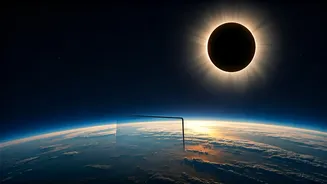
The Crimson Celestial Event
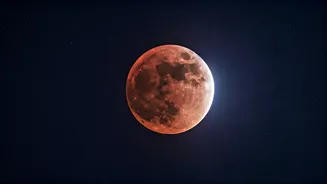
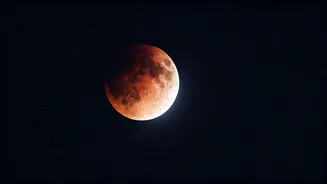
Mark your calendars for March 3, 2026, as the cosmos prepares to put on a show with the upcoming total lunar eclipse. Often nicknamed the 'Blood Moon'
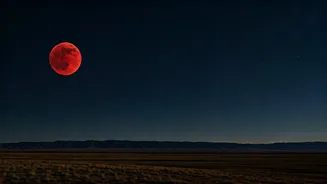
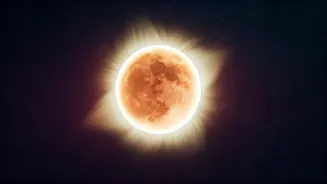
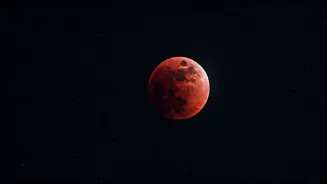
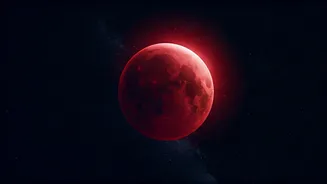
due to its dramatic reddish appearance, this astronomical spectacle occurs when the Earth positions itself perfectly between the Sun and the Moon. As our planet casts its shadow upon the lunar surface, direct sunlight is blocked, yet a sliver of light still manages to reach the Moon, filtering through Earth's atmosphere. This atmospheric scattering is what bestows upon the Moon its characteristic fiery hue, transforming it into a celestial ruby against the night sky. Unlike solar eclipses, which demand special viewing equipment, lunar eclipses are completely safe to observe with the naked eye, offering an accessible marvel for all.
Global Visibility & Indian Outlook
The much-anticipated total lunar eclipse of March 3, 2026, promises a spectacular view for audiences in North America, South America, Europe, and Africa. However, for enthusiasts in India, this particular event will unfortunately not be visible. While this means Indian skywatchers will miss out on this specific 'Blood Moon' occasion, the universe always has more wonders in store. It is highly recommended to consult local astronomical calendars and resources for precise timings and visibility information pertinent to India's region, as future lunar eclipses may offer a different viewing experience.
Understanding the 'Blood Moon'
The evocative term 'Blood Moon' specifically refers to a full moon that undergoes a total lunar eclipse. The striking crimson color is not a result of any change in the Moon itself, but rather a beautiful consequence of how sunlight interacts with Earth's atmosphere. As the Earth obstructs direct sunlight from reaching the Moon, the atmosphere acts like a filter. It scatters away shorter blue wavelengths of light, allowing the longer, redder wavelengths to pass through and bend towards the Moon. The precise shade of red can vary significantly depending on the atmospheric conditions on Earth at the time – factors like volcanic ash or cloud cover can influence the intensity and hue of the lunar glow. This phenomenon typically lasts for about 59 minutes during the totality phase, offering a prolonged and captivating visual.
Future Celestial Prospects
For those in India who will miss the total lunar eclipse on March 3, 2026, there's no need to despair. The cosmos is constantly offering new opportunities to witness these awe-inspiring events. While this specific 'Blood Moon' may be out of reach, astronomers are already tracking future lunar eclipses that will be visible from India. Keeping abreast of updates from astronomical organizations and reliable space agencies is key to not missing out on future celestial showcases. Astronomical calendars are invaluable resources for pinpointing dates and specific visibility windows for upcoming eclipses and other significant space events, ensuring that you remain informed about the next chance to witness such wonders.