






A Growing Threat
The pervasive nature of microplastic contamination is a stark reality, with alarming trends like a 50% surge in microplastics found in human brain tissue
over a mere decade. These tiny plastic fragments are not confined to our environment; they are circulating in human blood and have even been detected in placental tissue of unborn children. This alarming spread highlights a critical public health issue. In some communities, like Warrington, Virginia, residents faced the disheartening reality that government agencies were unwilling to fund the necessary remediation for local contamination. This situation underscores the urgent need for innovative, accessible solutions to combat the relentless influx of microplastics into our water sources and, consequently, our bodies. The sheer scale of the problem, with millions of metric tons released annually, demands immediate and effective interventions.
Magnetic Breakthrough
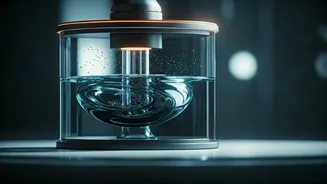
Eighteen-year-old Mia Heller has engineered a revolutionary approach to microplastic removal, bypassing the limitations of traditional water filtration systems. Dissatisfied with the constant and costly replacement of filter membranes, a common pain point for households, Heller devised a system that eliminates membranes entirely. Her innovative design utilizes ferrofluid, a magnetic liquid, to effectively capture microplastics. The prototype boasts an exceptional removal rate of 95.52% and demonstrates a remarkable efficiency by recycling 87.15% of its magnetic filtration medium. This ferrofluid technology works by attracting and binding to microplastic particles as water passes through the system's integrated modules. After several iterations, Heller successfully optimized the ferrofluid placement to prevent clogging while ensuring efficient magnetic separation, a critical engineering feat.
Health Imperative
The escalating microplastic crisis has garnered the attention of scientific experts, with toxicologists validating the significance of Heller's innovative filtration system. A University of New Mexico toxicologist has lauded her work as a "really great idea" and essential for addressing the contamination that affects an astonishing 1,300 species. The urgency is palpable, as microplastics have infiltrated even the most remote corners of the planet, from the Mariana Trench to the peaks of Mount Everest. The health implications for humans are equally concerning, with research linking plastic fragments to serious conditions such as cancer, cardiovascular disease, hormonal imbalances, and neurological disorders. While conventional water treatment plants manage to remove between 70% and 90% of microplastics, Heller's system significantly surpasses this performance, achieving a 95.52% removal rate. This achievement not only demonstrates the technology's efficacy but also earned her recognition and a $500 award from the Patent Office Society, underscoring its potential impact.
Market Potential
While Mia Heller's innovative magnetic filtration system shows immense promise, its widespread commercial deployment hinges on overcoming scalability challenges, particularly regarding the cost of ferrofluid production for industrial applications. Heller's immediate focus is on residential markets, acknowledging that large-scale municipal systems would currently face prohibitive ferrofluid expenses. Nevertheless, her technology addresses a significant gap in the current market, where established solutions predominantly rely on costly and maintenance-intensive membrane-based filters. Should advancements lead to a reduction in ferrofluid manufacturing costs, this system could profoundly disrupt the residential water filtration sector, which is currently dominated by cartridge-based alternatives. Heller's ambition is to eventually introduce her invention to the market, building upon ongoing validation efforts at the collegiate level. The trajectory of microplastic filtration technology appears secure; the critical question is whether student-led innovation can outpace established manufacturers in delivering this much-needed solution to families worldwide.