





An Unlikely Friendship
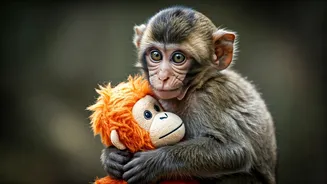
In the heart of Japan's Ichikawa City Zoo, a tiny Japanese macaque named Punch became an unlikely internet sensation. Born in July of the previous year,
Punch's early life was marked by a profound lack of maternal care, as his mother abandoned him shortly after birth. This abandonment left the infant macaque distressed and seeking solace in an unconventional companion: a stuffed orangutan toy. Videos circulated widely on social media, showcasing Punch's interactions with this plush toy, which became a symbol of his isolation and resilience. The sight of the young monkey clinging to the orangutan stirred deep empathy from viewers worldwide, leading to an outpouring of concern and support for the little primate. This viral phenomenon highlighted the deep connection humans can forge with animals, even in tragic circumstances, and brought attention to the welfare of animals in captivity.
Reasons for Abandonment
The perplexing behavior of maternal abandonment in the animal kingdom, particularly concerning Punch's situation, has been a subject of expert analysis. Primatologist Alison Behie from the Australian National University shed light on the complexities, suggesting that in Punch's case, his mother was a first-time parent, indicating a potential lack of experience and maternal instinct. Beyond inexperience, Behie noted that several other factors can contribute to a mother monkey abandoning her infant. These include the mother's age, her overall health, and external environmental pressures. Zookeepers also theorized that Punch's birth during a period of intense heatwave may have exacerbated stress levels for his mother. In environments where survival is precarious due to external stresses, mothers might prioritize their own well-being and future reproductive opportunities over caring for an infant whose health could be compromised by the harsh conditions. This perspective offers a more nuanced understanding beyond simple neglect, framing it as a survival strategy under duress.
Zoo's Response & Future
In response to the widespread concern and viral attention surrounding Punch, the Ichikawa City Zoo has taken steps to ensure his well-being and integration. Zookeepers have been actively involved in hand-raising Punch, closely monitoring his development and progress. A key aspect of their strategy involves gradually introducing him to other macaques, aiming to foster social bonds and normalize his interactions within his own species. As zookeeper Kosuke Shikano explained, baby Japanese macaques naturally cling to their mothers for muscle development and a sense of security immediately after birth. Lacking this crucial initial bond, Punch required dedicated support. The zoo's efforts aim to compensate for the missing maternal care, providing him with the necessary physical and emotional support to thrive and eventually integrate into macaque society. This approach underscores the zoo's commitment to the welfare of the animals under their care.
Social Media's Double Edge
Punch's story, amplified by the vast reach of social media, has undeniably connected millions of people to his plight, highlighting the powerful role digital platforms play in raising awareness for animal welfare issues. Conservation psychologist Carla Litchgfield pointed out how these platforms can foster empathy and understanding for animals, especially in the face of global challenges like habitat loss and climate change. However, Litchgfield also cautioned about a potential negative consequence: the increased risk of illegal trade in infant monkeys. The immense cuteness and perceived appeal of baby monkeys as exotic pets, fueled by viral content, can inadvertently drive demand for them in the illegal pet trade. This means that while social media can be a force for good in conservation and awareness, it also necessitates careful consideration to prevent unintended harm to the very animals it seeks to protect, urging a balance between emotional connection and responsible action.