






The Companionable Cavalier
When introducing a canine to a cat-centric household, size and energy levels are crucial considerations. The Cavalier King Charles Spaniel emerges as a stellar
choice, specifically bred for companionship. These small spaniels possess an inherently gentle disposition and are quite sensitive to their surroundings. Their modest stature, often comparable to that of a domestic cat, significantly reduces any potential intimidation factor for their feline housemates. Cavaliers are generally content with sharing living spaces, such as the sofa, making them a non-threatening and agreeable addition to a cat's established territory. Their inherent sweetness and desire to be close to their humans make them excellent candidates for a peaceful integration.
The Serene Golden Retriever
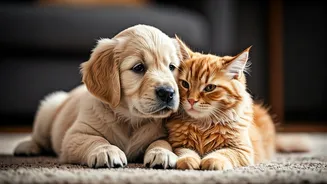
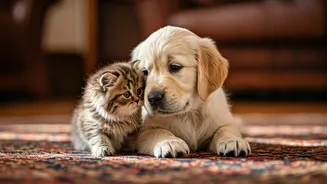
The Golden Retriever rightfully earns its reputation as a natural peacekeeper among animals. Their inherent temperament is characterized by a strong desire to please and a notable absence of aggression. A Golden Retriever typically doesn't perceive a cat as prey; instead, they view them as potential companions to be cherished. Their remarkable patience allows them to handle situations where a cat might exhibit territorial behaviors or become a bit feisty. Rather than engaging in conflict, a Golden is more inclined to disengage or offer a calm response, de-escalating potential tensions. This inherent understanding and gentle approach make them a top pick for multi-pet homes.
The Unhurried Basset Hound
For households where a feline companion prefers a slower pace of life, the Basset Hound presents an ideal solution. Despite their hound classification, Basset Hounds are primarily driven by scent rather than sight, meaning their interests lie more in exploring smells than in chasing. They are renowned for their exceptionally laid-back, almost languid, demeanor. This low-energy lifestyle aligns perfectly with a cat's natural inclination for relaxation and long naps, particularly in sunlit spots. Their calm presence ensures they are unlikely to disrupt a cat's peaceful routines, fostering a tranquil environment for both pets.
The Adaptable Labrador Retriever
Labrador Retrievers are celebrated for their unparalleled adaptability, making them one of the most versatile breeds for integrating into diverse living situations. Their high trainability is a significant asset in a multi-pet household. By establishing clear boundaries early on and consistently rewarding calm behavior around the cat, Labs quickly learn to manage their interactions appropriately. Although known for being sturdy and playful, they also possess a gentle disposition that allows them to adjust their energy levels to match their feline housemates. This capacity for modulation ensures a more harmonious coexistence.
The Social Beagle
Beagles are fundamentally pack animals, thriving on social interaction and viewing their household as an extended family unit. For a Beagle, the more members in the pack, the merrier. They are inherently social creatures and generally accept cats as just another integral part of the family. While Beagles can be quite vocal and prone to howling, they are seldom aggressive. Any 'play-chasing' behavior observed is typically rooted in a desire for engagement and interaction rather than a predatory instinct, making them more likely to seek playful connection than cause alarm.