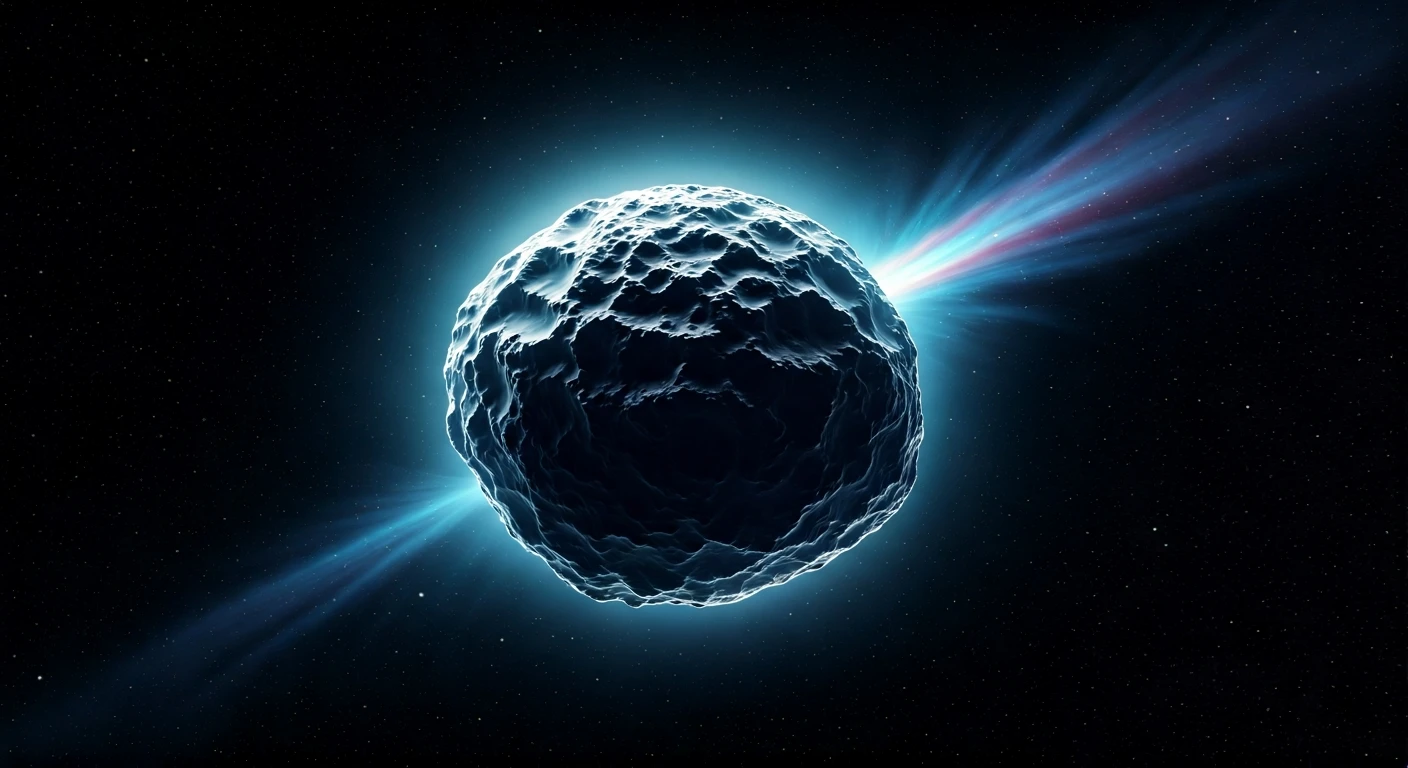








Initial Intrigue Explained
The excitement started as astronomers focused their telescopes towards the interstellar comet 3I/ATLAS. The initial hype was fueled by the unknown. However,
after careful observation, NASA scientists and astronomers concluded that there were no major mysteries about the comet. The scientific community closely monitored the comet, eager to analyze its composition, trajectory, and any unusual characteristics. The media, too, closely followed these developments, reporting updates and findings as they emerged. There was significant interest in determining whether the comet was different from those found within our solar system. Astronomers were keen to discover if 3I/ATLAS had any unique attributes that would add to our knowledge of comets and space.
Comet Composition Details
NASA's analysis of 3I/ATLAS focused heavily on its composition. Scientists used various instruments, including spectrographs and imagers, to determine what the comet was made of. They identified the presence of ice, dust, and various organic compounds, including carbon monoxide and carbon dioxide. The specific ratios of these elements were carefully measured to compare them with comets within our solar system. The data offered valuable insights into the comet's formation and its journey through interstellar space. Additionally, this analysis helped determine whether the comet had been affected by the conditions of interstellar space, offering clues on how materials can survive such harsh conditions. The composition data provided vital context for comprehending the comet's past and its interactions with the environment it has traversed.
Trajectory and Orbit
Another key area of NASA's research focused on the comet's trajectory and orbit. Accurate measurements of the comet's path were crucial for understanding its origin and its journey through space. Scientists carefully tracked its movements, taking into account gravitational influences and its velocity. This detailed analysis showed that the comet did not originate in our solar system, affirming its interstellar nature. Understanding the orbital path enabled them to trace its journey, providing insights into its time in interstellar space and when it could have interacted with other celestial bodies. Further analysis will assist scientists in refining models for interstellar object movements, enhancing the understanding of how these objects move through the vastness of space and their impact on different regions.
Unexpected Findings Summarized
Although the team concluded that there were 'no surprises' when investigating 3I/ATLAS, some interesting observations arose. Researchers observed how the comet's behavior was very similar to that of other comets that originate from our solar system. This aspect was particularly interesting, as it challenged some initial assumptions about the behavior of interstellar objects. Scientists also noted how the comet evolved, with changes in its size and activity levels as it came closer to the Sun. NASA concluded that despite the initial hype, the comet’s properties were largely consistent with what scientists already knew about these icy space rocks. The observations provided valuable data that advanced the understanding of cometary behavior, and the comet's journey.