


Winter's Dazzling Displays
As 2026 dawns, the winter sky offers a breathtaking array of celestial sights. January kicks off with the 'Wolf Moon' on Perihelion Day (Jan. 3), coinciding
with the peak of the Quadrantid meteor shower in the early hours of Jan. 4. Jupiter takes center stage, particularly on Jan. 10 when it reaches its opposition, appearing exceptionally bright and prominent in the evening sky. The month also features various moon phases interacting with constellations and planets; for instance, a waning crescent moon will be visible near Antares before dawn on Jan. 14, and Orion's red and blue stars will be a highlight on Jan. 26. Keep an eye out for Earthshine on the crescent moon on Dec. 23 and March 15, offering a subtle view of our own planet's illumination. The constellations Ursa Minor and Ursa Major will also be prominent, with Ursa Minor visible after dark on Dec. 29 and Ursa Major rising on Jan. 17. The Winter Hexagon, a prominent asterism, will be visible after dark on Jan. 12, alongside the Winter and Summer Triangles on Jan. 5. Don't miss the 'Christmas Star' representation by Jupiter in late December and the 'Ramadan Moon' with Mercury in mid-February.
Spring's Celestial Awakening
As winter transitions to spring, the night sky continues to present a mesmerizing collection of events. February promises a 'planet parade' on Feb. 8 and Feb. 19, offering excellent opportunities to spot multiple planets in alignment. Jupiter remains a key player, appearing at its February best on Feb. 15 and ruling the evening sky on Feb. 3. The constellations continue their graceful movement: Leo, the herald of spring, will be visible on Feb. 7, and the 'Winter Triangle' takes flight on Feb. 22. You can also spot Orion and his dogs on Feb. 5, and Orion's Belt on Feb. 16. March brings further celestial wonders, including Venus and Saturn in twilight conjunctions on March 7 and March 8, providing a beautiful pairing in the evening sky. A total lunar eclipse is scheduled for before dawn on March 3, preceded by a moon near Regulus on March 1 and March 2. The 'Seven Sisters' of the Pleiades will be a frequent visitor, appearing with a waxing moon at sunset on March 13 and shining next to the moon on Feb. 23. Look for the zodiacal light in the west on Feb. 14 and after sunset on March 5, a subtle glow that hints at the light scattered by dust in our solar system. The Northern Lights season also peaks around March 9, offering a chance for spectacular auroral displays.
Lunar Phases and Planetary Encounters
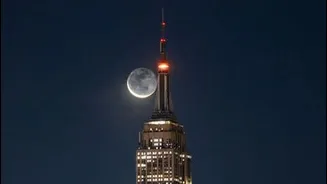
Throughout the early months of 2026, the Moon will play a starring role in countless celestial rendezvous, offering varied perspectives on its phases and its proximity to other celestial bodies. A young crescent moon will greet stargazers on Jan. 19, while a slender crescent moon will shine with Saturn in the western sky on Feb. 19. The 'half-lit first quarter moon' provides a unique viewing opportunity where the shadows of mountains on its surface become clearly visible. Even the thinnest, razor-thin crescent moon can be observed alongside planets like Saturn after sunset on Feb. 19. Earthshine, the gentle illumination of the Moon by sunlight reflected off Earth, will be visible on a crescent moon on Dec. 23 and March 15. The New Moon of March 2026 promises particularly stunning views, not only of Jupiter and Venus but also of the ethereal zodiacal light. Meanwhile, the New Moon of January 2026 offers prime opportunities to view Jupiter and Saturn, along with the distinct winter stars. Lunar eclipses are also part of the 2026 celestial calendar, with a total lunar eclipse occurring before dawn on March 3. The Moon's path will also take it near prominent constellations and stars, such as Bull's Horns on Jan. 28, the 'big V' of Taurus on Jan. 7, and through Cancer, 'The Crab' constellation, on March 17.