
A Comet's Journey
Astronomers are buzzing about Comet C/2025 R3 (PanSTARRS), a long-period visitor that was first detected in September and is now making its way towards
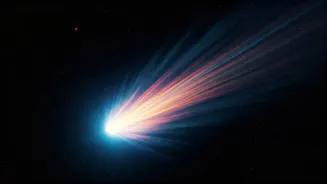
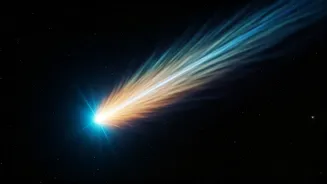
the Sun. Its close approach to our star in April presents a prime opportunity for skywatchers. The most favorable viewing period is expected to span from mid-April to early May. For those looking to maximize their chances, the nights around the April 17 new moon will offer the darkest skies, ideal for spotting fainter celestial objects. This comet's potential brightness is a subject of much anticipation. As comets venture closer to the Sun, they can dramatically intensify in brightness due to the release of gases and dust, creating the iconic glowing tails associated with 'great comets.' However, this cosmic behavior isn't guaranteed; some comets may remain dim, or even break apart. Early predictions for Comet R3's visibility are quite varied, ranging from a magnitude of approximately 8, which would necessitate binoculars or a small telescope, to a potentially stunning magnitude of 2.5, visible to the naked eye in exceptionally dark locations. Regardless of its ultimate brilliance, maximizing your viewing experience will involve seeking out a dark horizon, far from the glare of city lights, and allowing your eyes around 20 minutes to adapt to the darkness.
Catching the Comet
To truly appreciate Comet C/2025 R3, especially if it achieves significant brightness, having a pair of binoculars readily available will greatly enhance the details you can observe, potentially revealing a fuzzy celestial body with a hint of a tail. Pinpointing the comet's exact location each night can be challenging as its position shifts. Fortunately, modern technology offers solutions; utilizing a stargazing application or a live online tracker will be invaluable for precisely locating where to direct your gaze. The timing of your observations is crucial, and it might require an early start. As Comet R3 makes its closest approach to the Sun in late April, Northern Hemisphere observers will likely find it as a morning object, visible shortly before sunrise. Following this, as the comet hopefully survives its solar encounter, viewing conditions will shift to favor the Southern Hemisphere in early May. During this period, it will appear low in the western sky after sunset. However, be mindful that the full moon on May 1 could present a challenge for optimal viewing towards the end of this observational window, potentially washing out fainter details.
Celestial Alternatives
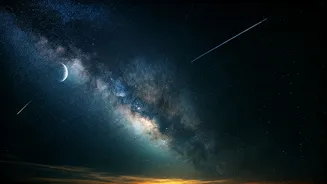
While the allure of Comet C/2025 R3 is undeniable, the universe offers backup entertainment should this cosmic visitor not live up to its brightest expectations. Even if the comet remains elusive, the night sky has reliable alternatives ready to impress. Mark your calendars for April 22 and May 6, as these dates signify the peak visibility for the Lyrid and Eta Aquariid meteor showers, respectively. Under favorable conditions, these showers are known to produce an impressive display, with stargazers potentially witnessing anywhere from 10 to 20 meteors streaking across the sky per hour. These events provide a fantastic opportunity for anyone interested in astronomy, offering a chance to enjoy the wonder of the cosmos even if the primary celestial attraction doesn't shine as brightly as hoped. Both meteor showers are predictable events, offering a reliable and exciting spectacle for observers worldwide.