





A Cosmic Crime Scene
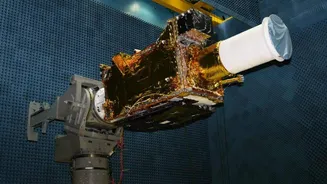
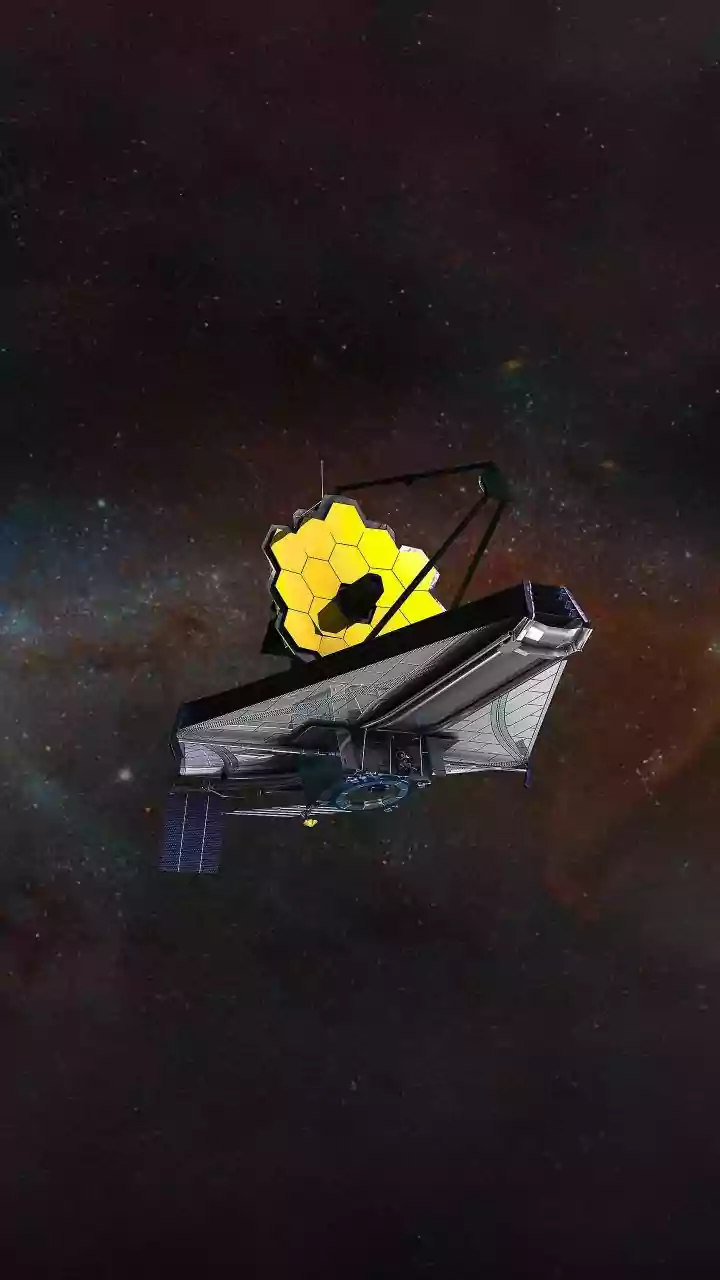
The James Webb Space Telescope, a revolutionary tool for astronomers, has provided unprecedented views of the early universe. Its advanced capabilities
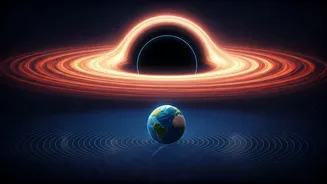
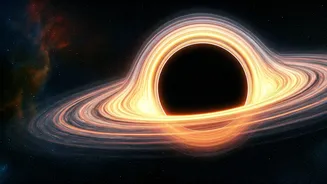
allowed scientists to witness a dramatic event: the violent demise of a galaxy at the hands of a supermassive black hole. This black hole, rapidly consuming matter, unleashed a barrage of energy, effectively dismantling the galaxy. The process, described as 'death by a thousand cuts,' highlights the devastating power of these cosmic giants. The JWST's observations have helped researchers understand how black holes influence galactic evolution in the early universe, where these events were more common. The data collected offers insights into the extreme physics near the event horizon of a black hole, an area where gravity is so strong that nothing, not even light, can escape.
Black Hole's Appetite
Supermassive black holes, residing at the centers of most galaxies, can grow by feeding on surrounding matter. The black hole observed by the JWST was actively consuming material, causing it to grow and emit powerful radiation. This radiation, including X-rays and other high-energy particles, is the evidence of the black hole's feeding frenzy. As material spirals towards the black hole, it forms a superheated disk, radiating tremendous amounts of energy. This energetic output can disrupt the surrounding environment, stripping away gas and dust, and ultimately shaping the galaxy's evolution. The discovery provides a detailed look at how black holes can trigger a cascade of events, from heating gas to completely dismantling an entire galaxy, and helping to shape the early universe.
JWST's Revelations
The James Webb Space Telescope's ability to observe infrared light has been crucial to this discovery. Infrared light can penetrate the cosmic dust that obscures distant galaxies, providing a clear view of the processes happening within them. This ability allowed astronomers to see the black hole's activity and the destruction it was wreaking on the galaxy. The data captured by JWST revealed the energetic processes at play, the outflow of material, and the overall impact of the black hole. The observations are a testament to JWST's power and its impact on the understanding of the universe. Moreover, the study of these types of events provides important clues about the formation and evolution of galaxies across cosmic time. The details revealed by the JWST have already started to revolutionize our understanding of how galaxies are shaped by their central black holes.
Early Universe Impact
The observation of this black hole destroying a galaxy offers valuable insights into the early universe, where such events were more common. Early in the universe's history, galaxies were smaller and more chaotic, with frequent interactions and mergers. These interactions could trigger the rapid growth of black holes, leading to events like the one observed. The JWST's data shows that supermassive black holes played a significant role in shaping the early universe's landscape. By studying how these black holes interacted with their host galaxies, astronomers can better understand how the first galaxies formed and evolved. The analysis of the JWST data gives an understanding of how the black holes' powerful influence affects the conditions within galaxies, influencing star formation and the overall structure of galaxies in the early cosmos.
Future Research Avenues
The findings from the James Webb Space Telescope have opened new avenues for future research. Scientists are eager to study similar events in other parts of the universe to get a wider perspective on the frequency and impact of black hole activity on galactic evolution. Future observations will focus on understanding the mechanisms behind black hole growth and the role they play in the formation of cosmic structures. The JWST will continue to be a crucial tool for examining these distant galaxies and their central black holes. The data obtained from JWST is expected to fuel detailed models and simulations, improving the knowledge of the universe, and will eventually allow scientists to probe the role of black holes in the broader context of cosmic evolution.