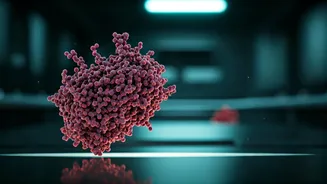








Dengue's Dangerous Cycle
Dengue fever, a persistent global health challenge, is particularly prevalent in India, affecting millions annually. Unlike many infections that confer
immunity after the first encounter, dengue presents a unique danger: subsequent infections with different strains can lead to a more severe, even life-threatening, condition known as Antibody-Dependent Enhancement (ADE). This phenomenon occurs when antibodies from an initial infection inadvertently facilitate the entry of a new viral strain into human cells, exacerbating the disease and complicating vaccine development. The current cyclical nature of outbreaks, often intensifying after monsoon seasons, underscores the urgent need for more effective and accessible treatments that can overcome this complex immune response.
Camel's Unique Advantage
The camel's immune system possesses an extraordinary characteristic: it naturally produces antibodies that can be easily adapted into 'nanobodies.' These are essentially miniaturized, highly robust versions of conventional antibodies. Stripped down to their essential virus-fighting components, nanobodies lack the 'Fc region'—a segment of regular antibodies suspected of triggering the dangerous ADE effect. This inherent absence makes them significantly safer, as explained by Dr. Sharvan Sehrawat, the lead researcher. Their compact size and resilience allow them to penetrate viral structures more effectively than larger human antibodies, offering a targeted and potentially more potent therapeutic approach.
A Vast Antibody Library
The breakthrough wasn't a singular discovery but the result of extensive exploration. The IISER Mohali team meticulously compiled a colossal 'molecular library' comprising over 200 million antibody sequences derived from camel samples. This extensive collection acted as a treasure trove, enabling the team to meticulously search for and identify a specific nanobody with a remarkable affinity for the dengue virus's 'envelope protein.' This critical protein acts as the virus's key to unlock human cells for infection. By effectively jamming this molecular lock, the identified nanobody successfully halts the viral replication process, demonstrating significant promise in preclinical trials.
Promising Lab Results
The efficacy of these camel-derived nanobodies has been strikingly demonstrated in laboratory and animal studies. Mice subjected to lethal dengue infections experienced complete recovery when treated with the nanobodies. The treatment demonstrably reduced viral loads and mitigated inflammation in vital organs, showcasing a potent protective effect. Crucially, unlike some experimental therapies, the nanobody treatment did not produce any adverse reactions in the tested subjects. These overwhelmingly positive results have paved the way for further development and clinical investigation of this novel dengue antidote.
Plant-Based Production Goals
Looking beyond initial efficacy, the IISER team is focusing on making this revolutionary treatment widely accessible. Their innovative approach involves 'molecular farming,' a method to mass-produce these nanobodies using plants. Researchers have already successfully cultivated these antibodies within laboratory plants such as tobacco and Arabidopsis. The ultimate ambition is to scale this production to common fruits like bananas. This strategy leverages the rapid biomass generation of plants, envisioning a future where dengue medicines could be harvested directly from fruit, drastically reducing production costs and ensuring affordability for the masses, particularly in resource-limited settings.
Future Treatments Evolving
While the current nanobody formulation has proven effective, it requires daily administration. The research team is actively advancing towards developing a more convenient 'bivalent' version. This next-generation treatment aims to involve a single injection of a super-antibody, significantly simplifying patient adherence and potentially improving treatment outcomes. The Indian Council of Medical Research has granted approval for a three-year project dedicated to upscaling this promising therapy, signaling a strong commitment to bringing this potential dengue cure from the laboratory to the people who need it most.