






A Quiz's Alarming Revelation
A recent quiz in a Mumbai international school revealed a surprising lack of awareness among middle schoolers regarding prominent city landmarks. When
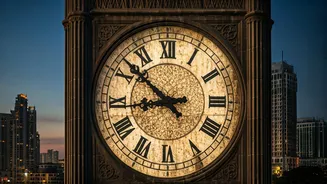
asked to identify the famous clock tower facing Oval Maidan, the expected easy answer resulted in blank stares and incorrect guesses, with even 'Big Ben' being offered. This disconnect highlighted a growing generational gap in understanding the historical and daily importance of public clock towers. The author realized that future generations might never grasp how citizens once relied on these structures, not just for timekeeping, but as integral parts of the urban landscape they 'looked up' to in multiple senses.
Guardians of Time
The narrative then shifts to Venkatesh Rao, a horologist from Hyderabad who worked on the Christ Church clock in Byculla, a project that made it the city's oldest operational public timepiece. Rao, who calls himself a 'ghadiwallah' in contrast to the respect clockmakers receive in Europe, expressed a poignant sentiment about the fading appreciation for vintage timepieces in India. He described the intricate mechanics of analogue clocks, involving elements like escape wheels, pendulums, and barrels, a complex world few nowadays seem interested in preserving. His words underscored the feeling of obsolescence experienced by those dedicated to maintaining these historical machines, a sentiment echoed by the author's experience at the quiz.
Echoes of a Bygone Era
Clock towers once served a crucial public service, providing a communal way to track time and often standing as a source of civic pride. For those who grew up in Mumbai, the resonant chimes of the Rajabai Clock Tower or the sight of the clock atop CSMT station were familiar and comforting. While towers like the Bomanjee Hormarjee Wadia Clock Tower might be less conspicuous, they too hold historical significance, with the Wadia Tower having received a UNESCO Asia-Pacific Award for Cultural Heritage Conservation in 2017, and the Rajabai Tower and its library block earning a similar accolade in 2019. However, the common populace often remains unaware of these prestigious recognitions, further contributing to the erosion of their perceived value.
Preserving Living History
The author questions whether today's youth truly engage with these remaining ticking monuments or understand their historical importance. Without a conscious effort to integrate awareness about clock towers into public consciousness, both through organic exposure and academic curricula, these structures risk becoming mere silent remnants of Mumbai's skyline. They will eventually be frozen in time, a poignant irony as the world continues to advance. This ongoing loss represents not just the disappearance of architectural marvels, but the fading of a shared heritage and a tangible connection to the city's past, leaving future generations disconnected from a vital part of their urban story.