








The Cylinder's Beginning
The origin of recorded music began with Thomas Edison's ingenious phonograph. In 1878, Edison patented a device that could both record and replay sound,
utilizing wax cylinders. This pivotal innovation broke the long-standing tradition of solely live musical experiences, setting the stage for music to be heard repeatedly. The phonograph's introduction heralded a new era, opening the doors for music to transcend the limits of a live performance, laying the groundwork for the recording industry, and transforming the cultural landscape.
Gramophone Flat Discs
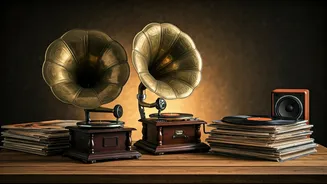
Emile Berliner's gramophone, which appeared at the turn of the 20th century, presented a major advancement in how people listened to recorded music. Berliner introduced flat disc records, and they rapidly gained popularity over the cylinders. This shift facilitated the growth of record collections, providing music lovers with a convenient way to build their libraries of music. The gramophone's emergence also helped to bring music into numerous homes, as playback machines became stylish and widely adopted household items. This era marked an early step towards the widespread availability of recorded music.
Vinyl Takes Over
In the period spanning the 1940s to the 1960s, vinyl records emerged as the dominant music format. These records, made of vinyl, proved lighter and more affordable than the earlier shellac discs, making them more accessible to a wider audience. The introduction of 7-inch singles and 12-inch albums fueled a surge in music accessibility, especially among youth culture. The rise of vinyl became a defining cultural element, making music an integral part of trends and shared experiences.
Eight-Track Revolution
The 1970s saw the arrival of 8-track cartridges, an innovation that provided a more user-friendly way to enjoy music, particularly for music lovers on the move in cars. Although 8-tracks weren't without their flaws, they were a part of the trend toward mobile listening technology. The cartridges provided a convenient, albeit less reliable, means to listen to music. This technological step foreshadowed further developments in the portability and convenience of music playback.
Cassettes and Walkman
The 1980s heralded the advent of audio cassettes, an invention that significantly enhanced music portability. Cassettes empowered fans to produce their personalized compilations by creating mixtapes, fostering a sense of personalization. Sony's Walkman subsequently revolutionized personal listening; the Walkman made headphones and portable playback an integral part of mainstream culture. This blend of audio cassettes and personal audio players made it easier than ever to enjoy music anytime and anywhere.
Digital Sound Arrives
From the 1980s into the 1990s, the CD (Compact Disc) emerged, introducing digital audio quality, which was advertised as 'perfect sound forever'. CDs offered a higher capacity than either vinyl or cassettes, greatly impacting how artists structured their albums and how fans collected music. CDs revolutionized the audio landscape, as they offered a new level of audio fidelity and also shaped the way people listened to music. The CD’s impact permeated the structure of albums and influenced the way fans consumed music throughout the era.