





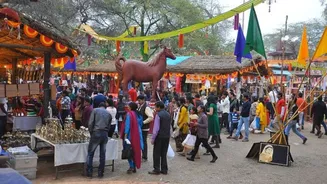
Festivals' Cultural Significance
India's harvest festivals are much more than mere celebrations of a successful crop. They are vibrant cultural events that mirror the cyclical nature of agriculture
and the importance of nature's gifts. These festivals offer a unique insight into the nation's diverse regional cultures. Each festival reflects the unique agricultural practices, local customs, and the spiritual beliefs of the communities that observe them. Across the country, these festivals offer a chance to express gratitude for the harvest and look forward to a time of plenty. The essence of unity and community spirit is greatly emphasized during the festival season. Families and friends come together to share meals, participate in rituals, and enjoy festivities. These celebrations also strengthen community bonds and teach future generations about their heritage.
Pongal's Tamil Nadu Tradition
Pongal, observed in Tamil Nadu, is a multi-day harvest festival marking the start of the Tamil month of Thai. The festival commences with Bhogi Pongal, where old belongings are discarded, symbolizing the removal of the old and the beginning of the new. The main day, Thai Pongal, involves the cooking of rice with milk and jaggery in a new pot, allowing it to boil over – a symbolic gesture of prosperity and abundance. Families decorate their homes with colourful kolam (rangoli) and offer prayers to the Sun God. The third day, Mattu Pongal, is dedicated to the worship of cattle, which are essential to farming. Traditionally, cattle are adorned and paraded. The celebrations involve community feasts, games, and the exchange of gifts, with each ritual and tradition highlighting the importance of the harvest and the community spirit.
Baisakhi's Punjab Celebration
Baisakhi, celebrated in Punjab, is a vibrant festival that marks the beginning of the solar new year and the harvest season. Primarily a Sikh festival, Baisakhi has deep historical significance as it commemorates the formation of the Khalsa Panth by Guru Gobind Singh in 1699. This festival showcases the cultural vibrancy of Punjab. Farmers celebrate the reaping of the harvest, expressing their gratitude for the abundance. The celebrations are characterized by energetic folk dances such as Bhangra and Giddha, traditional music, and feasting on local delicacies. Baisakhi melas (fairs) are organized across the region, featuring stalls, games, and cultural performances, drawing large crowds and creating a lively atmosphere. Baisakhi also symbolizes the spirit of community and the unity among people, reflecting a shared heritage and joy.
Onam's Kerala Grandeur
Onam, Kerala's most significant festival, is a harvest festival with deep roots in local history and culture. Celebrated with great enthusiasm, it marks the return of the legendary King Mahabali. The celebrations last for ten days and are filled with colourful traditions. Households are beautifully decorated with floral arrangements called 'pookkalam,' and the elaborate designs symbolize the spirit of Onam. The festivities include boat races (Vallam Kali), traditional dance forms such as Kathakali, and various cultural events. Onam is a time for feasting, with the 'Onam Sadhya,' a grand multi-course meal served on banana leaves, being the highlight. This festival promotes the idea of unity and prosperity and reflects Kerala's rich heritage and cultural diversity. Families come together to share meals and enjoy the festivities, creating a strong sense of community.
Lohri in Northern India
Lohri, primarily observed in the northern Indian states of Punjab, Haryana, and Delhi, is a festival that celebrates the harvest of the Rabi crops. Traditionally, Lohri is celebrated on the eve of Makar Sankranti. The festival involves lighting bonfires, around which people gather and sing and dance. The lighting of the bonfire symbolizes the end of winter and the start of longer days. The main rituals include offering til (sesame seeds), gajak, peanuts, and popcorn to the fire and praying for prosperity. Families and friends come together to enjoy the festivities, share sweets, and exchange greetings. Lohri symbolizes the spirit of togetherness, gratitude to nature, and the joy of sharing. The lively atmosphere, filled with laughter, music, and the warmth of the bonfire, makes Lohri a cherished celebration.
Makar Sankranti's Diverse Forms
Makar Sankranti is a pan-Indian harvest festival celebrated when the sun transits into the Capricorn zodiac sign. This event marks the end of the winter season and the start of longer days. The festival is celebrated under various names and traditions across different states. In Gujarat, people fly colourful kites, while in Maharashtra, sesame seeds and jaggery are exchanged as symbols of goodwill. In some regions, Makar Sankranti is associated with the preparation of specific dishes such as Pongal and Khichdi, which are offered to the Sun God. The cultural expressions of Makar Sankranti, from kite flying to the making of sweet treats, make it a time of community engagement and rejoicing. The festival is a celebration of the harvest and also a time to celebrate the return of warmer weather and the joy of life.
Bihu's Assam Festivities
Bihu, a set of three different festivals, is the most important festival celebrated in the state of Assam. Each Bihu marks a distinct phase in the agricultural cycle. Rongali Bihu, celebrated in April, marks the beginning of the Assamese New Year and the sowing of seeds. The festival involves feasting, dancing, and the traditional Bihu dance. Bhogali Bihu, celebrated in January, marks the end of the harvest season, with feasts and bonfires being the main highlights. The community organizes collective meals and enjoys various traditional games. Kongali Bihu, celebrated in October, is a more solemn occasion, observed during the transplantation of rice saplings. The celebrations vary in intensity but share a common thread of gratitude to nature, community unity, and the celebration of life. Each Bihu festival is an intrinsic part of the Assamese cultural identity, marking the cycles of farming and the changing seasons.