





Volcanic Majesty Unveiled
Hawaiʻi Volcanoes National Park, a UNESCO World Heritage Site on the Big Island, offers an unparalleled opportunity to witness the raw power of nature.
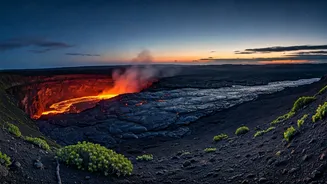
This incredible park is celebrated for its two highly active volcanoes: Kīlauea, known for its ongoing volcanic activity, and Mauna Loa, the largest active volcano globally, which last erupted in late 2022. Since its establishment on August 1, 1916, the park has expanded to cover over 333,308 acres. Its dramatic landscapes were shaped over 70 million years by lava flows that continue to build the Hawaiian Islands. Visitors can experience the unique phenomenon of lava flowing directly into the Pacific Ocean, a breathtaking display that underscores the dynamic geological processes at play. The park's significance extends beyond its geological wonders; it was designated an International Biosphere Reserve in 1980 and a World Heritage Site in 1987, highlighting its global importance for conservation and natural heritage. The park preserves a remarkable range of ecosystems, from the stark beauty of its volcanic craters and lava fields to lush rainforests and even alpine terrain near the summits of its mighty volcanoes, offering a comprehensive glimpse into Hawaii's geological and ecological diversity.
Exploring Scenic Wonders
The park provides numerous vantage points for spectacular views, even when Kīlauea isn't actively erupting. A must-do is driving Crater Rim Drive, which leads to the Kīlauea Overlook, offering unobstructed panoramas of the Halemaʻumaʻu crater and surrounding lava flows. When Kīlauea is in an eruptive phase, park rangers provide crucial information on safe viewing locations for active lava. For a comprehensive tour of the park's diverse geography, the 18.8-mile Chain of Craters Road is essential. This route descends towards the Pacific Ocean, revealing a dramatic progression of volcanic landscapes. Along the way, a short hike leads to the Puʻuloa Petroglyphs, the state's most extensive collection of ancient rock carvings. The road culminates at the Hōlei Sea Arch, a stunning natural rock formation sculpted by the ocean waves against ancient lava cliffs, offering a perfect spot for photography. It's advisable to prepare for this drive, as cell service is limited and amenities like food, water, and fuel are unavailable. The drive itself is an immersion into the island's geological history, showcasing the constant interplay between volcanic forces and the relentless power of the sea.
Trails for Every Adventurer
With over 150 miles of marked trails, Hawaiʻi Volcanoes National Park caters to hikers of all levels. The Crater Rim Trail offers an accessible introduction, winding through unique volcanic terrain, past steaming vents, and into vibrant rainforests. This trail can be experienced in sections, allowing visitors to tailor their hike. For an immersive journey into the park's fiery past, the Nāhuku, or Thurston Lava Tube, trail is a highly recommended short walk through a fern-laden rainforest leading to a 500-year-old lava tube, a natural tunnel formed by a molten lava flow. For a more challenging adventure, the Kīlauea Iki Trail descends onto a solidified lava lake created by the 1959 eruption, offering a 3.3-mile loop that typically takes two to three hours to complete and can be combined with a visit to Nāhuku. The Maunaulu/Puʻuhuluhulu Trail provides a moderate hike showcasing lava tree molds and a cinder cone, tracing the path of the 1969-1974 Maunaulu flow. For those seeking a gentle stroll amidst biodiversity, the Kīpukapuaulu trail is a 1.2-mile loop through a lush area rich in rare native plants and fauna. For the truly adventurous, backcountry hiking opportunities abound, including strenuous treks to the Mauna Loa summit, a 13,681-foot journey through varied ecosystems, with permits and safety briefings required for overnight expeditions.
Encounters with Island Wildlife
Hawaiʻi Volcanoes National Park is a vital sanctuary for a diverse array of endemic and threatened species. The park is home to seven threatened and 47 endangered species, including the iconic nēnē (Hawaiian goose), the honuʻea (hawksbill turtle), and the ʻōpeʻapeʻa (Hawaiian hoary bat), which arrived on the islands approximately 10,000 years ago. Along the park's coastlines, visitors might witness hawksbill sea turtles nesting under the cover of darkness or observe green sea turtles basking in the sun and feeding on algae. During the winter months, humpback whales can also be spotted offshore. Birdwatching enthusiasts will find this park a paradise, with opportunities to see endemic species such as the ʻapapane, Hawaiʻi ʻamakihi, ʻōmaʻo, and the Hawaiian hawk along Crater Rim Drive. The Mauna Loa Road area is known for sightings of the Hawaiʻi ʻelepaio, a type of flycatcher. While the park is a haven for native wildlife, it also contends with invasive species like pigs, cats, mongooses, and goats, which pose a threat to the delicate ecosystem.
Insider Tips and Exploration
According to park specialists, the Kahuku Unit, situated about 40 miles south of the main park entrance, is often overlooked by visitors drawn primarily to Kīlauea's activity. This lesser-known area, shaped by the 1868 eruption, offers a distinct experience with thriving forests on its volcanic slopes that provide crucial habitat for native birds. Kahuku is significantly less crowded, featuring eight hiking trails, a visitor contact station, and a park store. For those seeking a more remote adventure, reaching protected beaches like Halape involves a long, challenging hike, but rewards visitors with pristine, undeveloped shorelines. The Puna Coast Trail offers an 11-mile trek revealing ancient petroglyphs, native coastal plants, and striking sea arches, a journey few tourists undertake. At night, the park transforms into an astrophotographer's dream, with incredibly bright stars and planets, and during meteor showers, the celestial display can be unparalleled. This quiet, powerful environment inspires awe and profound respect for the natural world. A ranger-recommended easy route is the Kūpinaʻi Pali portion of the Crater Rim Trail, accessible to wheelchairs and strollers, providing excellent views of the caldera and crater.
Activities and Accommodations
Hiking and driving are the primary ways to experience the park's vastness, with over 155 miles of trails and 106 miles of roads, some of which are suitable for cycling. For those with limited time, the Crater Rim Drive Tour and the Chain of Craters Road Tour are recommended, each taking approximately four to six hours. The Crater Rim Drive Tour, starting from the Welcome Center, offers a comprehensive overview with stops at eight scenic overlooks, opportunities to peer into craters, walk through a lava tube, and feel the heat from steam vents, all while exploring culturally significant sites. The Chain of Craters Road, stretching 18.8 miles from the Kīlauea summit to the ocean, showcases the impact of volcanic activity on the landscape, with stops at craters, lava flow remnants, petroglyphs, and stunning ocean vistas. For families, besides hiking and ranger programs, immersive 'ʻike hana noʻeau' cultural experiences offer demonstrations and hands-on activities with Hawaiian artisans. Nighttime programs provide opportunities to learn about the cosmos from scientists and appreciate art inspired by the park. Lodging options include the historic Volcano House, situated on the Kīlauea summit, offering spectacular crater views, and various vacation rentals and B&Bs in nearby Volcano Village. Hotels are available in Hilo, about a 45-minute drive away. Camping facilities include the first-come, first-served Kulanaokuaiki Campground with basic amenities, and Nāmakanipaio Campground, offering cabins and tent sites.
Park Logistics and Accessibility
Hawaiʻi Volcanoes National Park is located on the southeastern side of the Island of Hawaiʻi, accessible via Highway 11. The main entrance is between mile markers 28 and 29, while the Kahuku Unit entrance, open Thursday through Sunday from 8 a.m. to 4 p.m., is between mile markers 70 and 71. Entrance fees are $30 per private vehicle, valid for seven days, with discounts for motorcycles and individuals entering on foot or bicycle. A Hawaiʻi Tri-Park Annual Pass, costing $55, is available for those visiting Hawaiʻi Volcanoes, Haleakalā, and Puʻuhonua ʻO Hōnaunau National Historical Parks. Despite its dynamic, 'wild place' nature, the park strives for accessibility. The Welcome Center, Volcano House, and Volcano Art Center are wheelchair accessible, with wheelchairs available for loan on a first-come basis. Key accessible trails include a majority of the Sulphur Banks Trail from the steam vents and the Kīlauea Overlook. Devastation Trail is also accessible with assistance. American Sign Language interpreters can be arranged for ranger talks and programs with advance notice, demonstrating the park's commitment to inclusivity for all visitors.