






What is Gangaur?
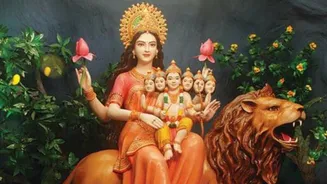
Gangaur stands as one of Rajasthan's most significant and colorful festivals, primarily dedicated to celebrating the sacred bond between Lord Shiva, known
as Gan, and Goddess Parvati, referred to as Gauri. This joyous occasion, observed during the Hindu month of Chaitra which typically falls between March and April, signifies the welcoming of the spring season and profoundly symbolizes enduring love, unwavering devotion, and the promise of a happy married life. It holds particular importance for women, who engage in earnest prayers either to find a suitable life partner or to ensure the long-lasting well-being and prosperity of their husbands. The festival's core is the veneration of these deities at home, with women leading the worship and perpetuating the traditions passed down through generations, embodying the spirit of marital harmony.
Historical Roots & Significance
The festival's origins are deeply entwined with ancient Indian traditions and profound mythological narratives, centering on Goddess Gauri's steadfast devotion and penance aimed at securing Lord Shiva as her husband. Over the passage of centuries, Gangaur has blossomed from its mythological roots into a major cultural extravaganza, vividly reflecting core values such as love, unwavering fidelity, and the pursuit of prosperity. This historical evolution has solidified its place as a cornerstone of Rajasthani culture, where the story of Gauri's dedication serves as a powerful allegory for marital commitment and devotion, resonating deeply with participants and observers alike.
Timing and Duration
Gangaur's commencement is precisely timed on the inaugural day of the Hindu lunar month of Chaitra, immediately following the boisterous celebrations of Holi. The festival then gracefully extends for a considerable period, typically spanning about 16 to 18 days. This extended observance not only signifies a marked transition from the chill of winter to the gentle warmth of spring but also provides ample time for communities to engage in its various rituals and celebrations. The duration emphasizes the importance of the season's change and its connection to renewal and fertility, making it a truly significant marker in the annual calendar for many.
Rituals and Devotion
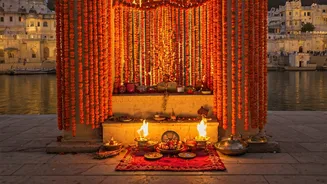
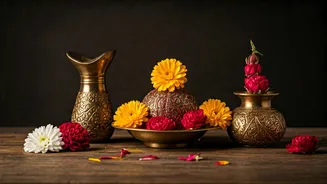
A central aspect of Gangaur involves women meticulously crafting clay effigies of Isar (Lord Shiva) and Gangaur (Goddess Parvati). These idols are then adorned with intricate patterns, vibrant colors, and precious jewelry, turning them into sacred objects of worship. Throughout the festival, women engage in dedicated prayer, sing traditional folk songs that narrate the story of Gangaur, and adorn their hands with elaborate mehendi designs. The prayers vary: unmarried girls implore for a life partner of their dreams, while married women offer their devotions for the long life, health, and prosperity of their husbands. These practices are steeped in tradition and represent deep personal aspirations and familial devotion.
Cultural Grandeur
The festival culminates in spectacular processions, particularly in the state capital, Jaipur, which become a major highlight and draw significant attention. During these vibrant parades, the specially decorated clay idols of Isar and Gangaur are carried through the streets, often placed in elaborately decorated palanquins. These processions are further enhanced by the presence of skilled folk artists, traditional musicians playing soulful melodies, and dancers showcasing the rich cultural heritage of Rajasthan. This public display is a magnificent showcase of the region's artistic talents, traditional attire, and community spirit, transforming the streets into a lively canvas of culture and celebration.
Symbolism and Farewell
Beyond its visual splendor, Gangaur is deeply symbolic, representing profound themes of devotion, fertility, and the joyous embrace of spring. The festival's conclusion is marked by the poignant immersion of the idols into water bodies, such as lakes or rivers. This ritual symbolizes Goddess Gauri's return to her celestial abode, signifying both an emotional farewell for the devotees and a natural continuation, a renewal of life itself as the earth awakens in spring. This act encapsulates the cyclical nature of life and the promise of new beginnings, imbuing the festival with a sense of both closure and hope for the future.