







Early Life & Education
Ratan Tata's journey began in 1937, in Mumbai, India. His childhood was marked by unique circumstances as he was raised by his grandmother. He received
his education in India and the United States. He went to Cornell University to study architecture and then received an advanced management program from Harvard Business School. These educational foundations provided a solid base upon which he built his impressive business acumen, blending global perspectives with a strong understanding of Indian realities. His academic pursuits were not just about acquiring knowledge; they were about cultivating a mindset of innovation and strategic thinking that would later define his leadership style.
Joining the Tata Group
Tata's career officially began when he joined the Tata Group in 1961. Initially, he worked on the shop floor of Tata Steel. Over time, he climbed the ranks, demonstrating a remarkable understanding of the business landscape. He embraced challenges that ultimately shaped his leadership style and vision. His dedication and focus on adapting to the evolving requirements of the Indian and global markets became evident. This hands-on experience and unwavering commitment laid the groundwork for his future role as the chairman, where he would leave an indelible mark on the company's trajectory.
Transforming the Tata Group
When Ratan Tata took over as chairman of the Tata Group in 1991, he initiated a significant transformation. He restructured the company and focused on key areas, like technology, innovation, and global expansion. His emphasis on ethical business practices and community welfare reshaped the company's approach. He encouraged the group to look beyond the Indian borders, leading to acquisitions such as Jaguar Land Rover, making the Tata Group a global player. He steered the company toward becoming a symbol of integrity and forward-thinking in the business world.
Innovations & Initiatives
Ratan Tata's leadership was characterized by a commitment to innovation and social responsibility. He championed several innovative projects, like the Tata Nano, to make affordable transportation accessible to the masses. He also initiated a series of community welfare programs, including the Tata Trusts, which work in health, education, and rural development. His focus went beyond profit, integrating social impact into the core of the group’s operations. These projects demonstrated his belief in using business as a tool for societal betterment, fostering a culture of innovation and social consciousness.
The Tata Nano Project
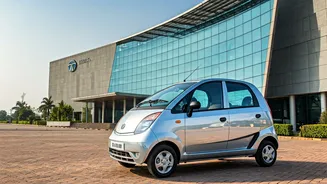
The launch of the Tata Nano in 2008 was a game-changer. Tata's vision was to create a car that was affordable for the average Indian family. The car was originally priced at around Rs 1 lakh, which was groundbreaking for its time. Though the Nano did not achieve the commercial success it aimed for, it underscored Tata's commitment to innovation and making essential products accessible to a large population. The Nano stands as a testament to Tata's willingness to challenge convention and strive towards solutions that benefit society as a whole.
Philanthropic Endeavors
Ratan Tata’s dedication to philanthropy is one of his defining traits. The Tata Trusts, established by the Tata Group, are among the largest charitable foundations in India. These trusts work across multiple sectors, including healthcare, education, and rural development. Tata's commitment extended beyond financial contributions; he actively participated in and supported many initiatives. His approach involved empowering communities and creating sustainable impacts. Through these philanthropic activities, he demonstrated a strong belief in giving back to society and making a meaningful difference in the lives of millions.
Legacy and Impact
Ratan Tata’s influence extends far beyond the business world. He is highly regarded for his integrity, visionary leadership, and philanthropic contributions. His principles have set a new standard for corporate governance and social responsibility. He is admired as a role model for aspiring entrepreneurs and business leaders. He has left an enduring legacy of a leader who prioritized values over profits. His contributions to the global business environment continue to inspire and encourage positive change in society, reinforcing the importance of ethics, innovation, and social responsibility.