




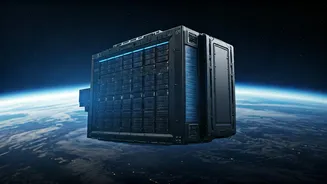


New Satellite Designs Emerge
Major defense contractors are channeling significant internal resources into the development of satellite systems capable of intricate movement and coordinated
actions within orbit. This strategic investment is fueled by the military's growing emphasis on "dynamic space operations," anticipating a sustained demand for spacecraft that can actively reposition, work together, and react swiftly in the space environment. Both BAE Systems and Lockheed Martin have recently showcased their ongoing efforts to fund and launch demonstration spacecraft. These prototypes are specifically engineered to navigate orbital paths, closely monitor other satellites, and function as integral components of more interconnected space architectures, signaling a significant shift in how satellites are designed and utilized for defense purposes.
BAE's Orbital Tug
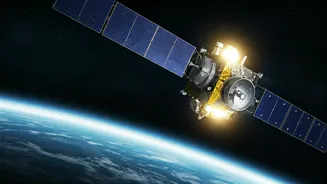
BAE Systems has introduced a novel spacecraft platform named Ascent, boasting a substantial payload capacity of approximately 2,200 kilograms. This satellite is engineered with the crucial capability of being refueled, positioning it as a potential "space tug." Such a function would allow it to efficiently transport payloads between different orbits or deploy secondary payloads on behalf of military clients. Brad Shogrin, Vice President and General Manager of BAE Systems Space & Mission Systems, highlighted the company's commitment, stating they have invested heavily in both the underlying technologies and the necessary manufacturing infrastructure. BAE Systems is targeting a preliminary "pathfinder" launch by 2027, intended for a classified customer, though details regarding its refueling interface or potential external partnerships remain undisclosed.
Lockheed's Space Dominance
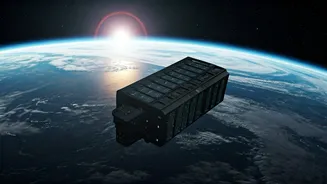
Lockheed Martin is advancing its vision for space dominance with its "Next-Generation Space Dominance" (NGSD) line, which includes both small and medium-sized satellites. Their designs feature a small satellite known as NGSD Vanguard and a larger, in-orbit refuelable spacecraft called NGSD Sentinel. Both are designed for autonomous maneuvering and seamless coordination across multiple space assets. Tim Lynch, Lockheed Martin's Vice President of Mission Strategy, explained that these satellites aim to demonstrate rendezvous and proximity operations (RPO) and advanced "battle management command, control and communications." This means the satellites can receive, interpret, and execute tasks in near real-time, coordinating with other systems effortlessly. RPO allows spacecraft to approach, inspect, or shadow other satellites in orbit, a key capability for contested space environments. The development leverages buses and components from Lockheed Martin's subsidiary, Terran Orbital, ensuring commonality in avionics, software, and payload interfaces.
Future Orbital Engagements
Lockheed Martin is looking towards the future, with on-orbit demonstrations planned as early as 2028 or 2029. They anticipate that one or both of their NGSD satellites will operate in geostationary orbit, performing critical maneuvering and command-and-control functions. The Sentinel variant, in particular, is being positioned as a strong contender for the Space Force's planned procurement of geostationary surveillance satellites under the RG-XX program. Lynch emphasized that while the core technologies have been proven, these upcoming demonstrations are vital for showcasing the ability to execute these complex operations at scale. This strategic push comes as a response to the increasing capabilities of other nations and the need for more agile, responsive satellite systems capable of operating in a contested space domain, moving beyond the limitations of legacy, fixed-orbit satellites.