





A Strategic Coastal Sentinel
Perched dramatically on the Kannur coastline, St. Angelo Fort is a living testament to over five centuries of tumultuous history and strategic importance.
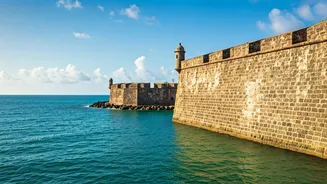
Its origins trace back to 1505 when Dom Francisco de Almeida, the inaugural Portuguese Viceroy of India, envisioned it as a vital military outpost. This fortress, with its distinctive triangular configuration and robust laterite walls, was meticulously designed to command a commanding view of Mopilla Bay, the serene Dharamadam Island, and the vast expanse of the Arabian Sea. Such an advantageous position was crucial for the Portuguese to monitor maritime traffic, assert their dominance, and safeguard their burgeoning trade interests along the Malabar Coast during the early phases of European colonial expansion. Today, the fort stands as a compelling intersection of enduring architecture, captivating natural landscapes, and significant historical events, offering visitors a palpable connection to the past.
Shifting Tides of Power
From its inception as a Portuguese stronghold, St. Angelo Fort served as a pivotal point for controlling trade routes and maintaining colonial authority along the coast. The fort's strategic value was recognized by other European powers; in 1663, the Dutch successfully seized control and implemented substantial enhancements to its defensive capabilities, leaving their indelible mark on its structure and layout. Later, in 1790, the British military established their dominance over the fort, transforming it into a key administrative and military station during their reign. This succession of different colonial powers has endowed St. Angelo Fort with a rich, multi-layered historical narrative, making it an exceptionally insightful site for anyone seeking to comprehend the complexities of colonial activities and the shifting geopolitical landscape of northern Kerala.
Fortress of Enduring Design
The architectural ingenuity of St. Angelo Fort is a striking blend of precision planning and robust construction. Its distinctive triangular form, constructed from solid laterite blocks, creates a compact and formidable defensive perimeter. The fort features wide ramparts that serve as elevated walkways, offering sweeping vistas of the sea, complemented by substantial bastions equipped for strategic artillery placement, underscoring its primary military purpose. A deep moat encircles the entire complex, a clear indication of its preparedness for land-based assaults and sieges. Within its walls, visitors can explore a poignant Dutch cemetery adorned with gravestones dating back to the 17th century, alongside functional elements such as horse stables, storage facilities, and later additions like British-era barracks and armories. Every facet of the fort's design speaks to a thoughtful approach centered on defense, administration, and the enduring presence of those who occupied it.
Scenic Coastal Vista
The breathtaking setting of St. Angelo Fort significantly enhances the visitor experience, offering a dramatic visual spectacle where history meets nature. Standing on its ramparts, one is greeted by the immense panorama of the Arabian Sea stretching out to the horizon, its waves perpetually crashing against the fort's rocky foundation. Adjacent to the fort, Mopilla Bay buzzes with the activity of local fishing boats and coastal life, adding a vibrant, dynamic element to the scene. Across the shimmering water, the picturesque Dharamadam Island adds further charm and depth to the coastal panorama. The ever-changing light playing across the sea and the unwavering strength of the laterite ramparts combine to create an atmosphere that is deeply connected to both the region's rich past and its natural splendor. The constantly evolving views throughout the day provide numerous opportunities for visitors to appreciate the expansive beauty of this historic coastline.
Exploring Fort's Charms
A visit to St. Angelo Fort invites a leisurely exploration of its many bastions, extensive ramparts, and remarkably preserved interior structures. The fort's open and accessible layout encourages visitors to wander freely, discovering both its imposing main features and its more secluded, tranquil corners at their own pace. For those seeking a deeper understanding, guided tours offer comprehensive insights into the fort's military strategies, its architectural evolution over time, and the significant historical events that transpired within its walls. Photographers will find ample inspiration in the striking contrasts between the weathered stone and the boundless sea, while others might prefer to simply relax on the lush lawns or in the shaded areas, absorbing the fort's serene and contemplative atmosphere. Ultimately, the fort provides a well-rounded experience, blending educational discovery with peaceful relaxation and the thrill of exploration.