






Unveiling the Future
In a significant move to dominate the inflight connectivity sector, Amazon has revealed the antenna that will power its upcoming constellation, directly
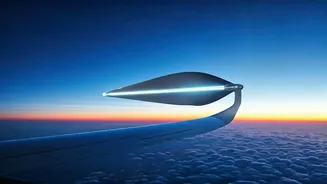
confronting the established presence of Starlink in the low Earth orbit (LEO) broadband arena. This new electronically steered antenna, dubbed the Amazon Leo Aviation Antenna, is engineered to cater to a wide spectrum of aircraft, from smaller regional jets to larger widebody planes. The technology promises remarkable onboard internet speeds, boasting download capabilities of up to 1 gigabit per second (Gbps) and upload speeds reaching 400 megabits per second (Mbps). Trevor Vieweg, Amazon Leo's director of global business, highlighted the system's capacity to support an entire plane of passengers and crew, ensuring seamless activity for everything from online gaming and movie streaming to music enjoyment and collaborative work. The aim is to create a service so swift and dependable that travelers will actively seek out flights equipped with Leo connectivity.
Competitive Landscape
The inflight connectivity (IFC) market is experiencing a dramatic surge in competition, particularly with the emergence of LEO broadband solutions. While SpaceX's Starlink currently offers its aviation service with download speeds of up to 310 Mbps and upload speeds up to 44 Mbps per terminal, Amazon is positioning its offering to surpass these figures. Amazon Leo has already deployed 241 of its planned 3,232 first-generation satellites, though initial service rollouts have faced delays attributed to launch capacity constraints. The company acknowledges that providing Wi-Fi on planes will be a subsequent phase, necessitating a denser satellite constellation. Airlines like JetBlue have already signaled their intent to adopt Amazon Leo, with plans to connect about a quarter of their fleet, aiming for service commencement in 2027. These aircraft currently utilize Viasat's geostationary orbit (GEO) satellites for their internet needs. Delta Air Lines, a major player in the aviation industry, has also announced plans to equip an initial 500 aircraft with Amazon Leo services starting in 2028. However, details regarding Delta's fleet-specific integration strategy remain somewhat vague, especially given their existing multi-provider approach involving Viasat and Hughes for different aircraft types. Viasat, for its part, has affirmed its ongoing commitment as Delta's primary IFC provider for the majority of its fleet.
Technological Advancements
Amazon's newly unveiled aviation antenna is a direct adaptation of its Leo Ultra phased-array design, meticulously modified to meet the stringent performance and durability demands inherent in commercial aviation. This sophisticated antenna technology enables the achievement of significantly higher download and upload speeds compared to many existing solutions. The LEO architecture, by placing satellites in lower orbits, inherently offers reduced latency, translating to a more responsive and fluid internet experience for passengers, a notable advantage over traditional GEO systems. This technological edge is crucial as airlines increasingly explore multi-provider and multi-orbit strategies to ensure robust connectivity across their fleets. Beyond direct service provision, Amazon is also actively collaborating with aircraft manufacturers. This strategic approach aims to integrate Leo technology directly into the manufacturing pipeline, making it available as a factory-installed option (line-fit) or as a straightforward upgrade for existing aircraft (retrofit). This facilitates a smoother and potentially more widespread adoption of their LEO connectivity solution across the global aviation landscape.