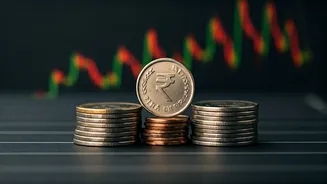

Rupee's Downward Trajectory
The Indian Rupee has recently faced significant depreciation, breaching psychological barriers and causing concern among traders. The weakening of the
Rupee is influenced by multiple factors, including fluctuations in the global dollar and domestic economic pressures. A falling Rupee can have both positive and negative consequences. On one hand, it can boost exports by making them more competitive in international markets, potentially benefiting sectors that rely heavily on exports. Conversely, a weaker Rupee increases the cost of imports, impacting businesses that depend on foreign goods and raw materials. This can contribute to inflationary pressures, potentially eroding purchasing power and impacting consumer confidence. Investors monitor these trends closely, as currency fluctuations can significantly influence the performance of various financial instruments.
IT Stocks in Focus
The IT sector, comprising major players such as Infosys, TCS, and Wipro, is particularly sensitive to Rupee fluctuations. When the Rupee declines, IT companies see their revenues, which are often earned in foreign currencies, get a boost when converted back to Rupees. This phenomenon can lead to an increase in stock prices, as seen recently, with some IT stocks rising by up to 2% due to the Rupee's depreciation. However, the impact is not uniformly positive. Increased import costs for IT infrastructure and software can offset gains. Furthermore, the overall market sentiment affects stock performance. Investor confidence is a crucial factor. Uncertainty and fear around the Rupee’s movements can deter investment and lead to volatility, impacting the entire sector.
Market & Investor Anxiety
The depreciation of the Rupee has contributed to heightened anxiety among investors. Several factors, including geopolitical events, global economic trends, and domestic market conditions, affect investor sentiment. Concerns about a potential Rupee decline to levels that could cause considerable economic disruption are rising. This uncertainty can trigger risk-averse behavior, with investors re-evaluating their portfolios and potentially moving capital to safer assets. The continuous monitoring of financial metrics, government policies, and global economic data is crucial for investors. Tools like investment ideas and smart market indicators offer insights. Yet, the persistent pressure on the Rupee underscores the need for cautious investment strategies and a thorough understanding of market risks.
Factors Driving the Rupee
Multiple factors contribute to the ongoing pressure on the Indian Rupee. The strength of the US dollar plays a significant role, as fluctuations in the dollar's value have a direct impact on emerging market currencies, including the Rupee. Global economic uncertainties, such as changes in interest rates by major central banks and shifts in global trade dynamics, also influence currency values. Domestic factors are just as important. The level of foreign investment into India, the country's trade balance, and government fiscal policies can all affect the Rupee. Trade deficits, where imports exceed exports, can increase demand for foreign currency and further weaken the Rupee. Conversely, a strong economy with robust foreign investment can help stabilize the currency.
Navigating Uncertainties
Investors are increasingly seeking strategies to mitigate risks. Diversifying portfolios across various asset classes and geographic regions is a common approach. Hedging currency risk, through financial instruments like currency futures or options, allows investors to protect against adverse exchange rate movements. Keeping informed about market developments and understanding economic indicators is also vital. Following financial news from trusted sources, and consulting financial advisors can help investors make informed decisions. Understanding the correlation between IT stocks, Rupee fluctuations, and the broader economic landscape is crucial for making informed investment choices. Being prepared for volatility and focusing on long-term investment goals can improve resilience during periods of currency instability.