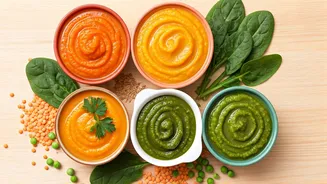






Gentle Introduction to Flavors
Starting your baby on solids is a significant milestone, and introducing them to Indian cuisine can be an exciting adventure. Begin with single-ingredient
purees to identify any potential allergies. For instance, start with a simple rice porridge (rice flour cooked in water or breast milk/formula). Once your baby adapts well to individual ingredients, gradually introduce combinations. Ensure all ingredients are thoroughly cooked and pureed to a smooth consistency. Remember to always consult with your pediatrician before starting solids and when introducing new foods to your little one. This approach allows your baby to explore a range of tastes, beginning with the basic flavors of rice, lentils, and vegetables, which can then be combined as the baby grows older. Introduce one new food at a time, watching for any signs of intolerance, and building a foundation of healthy eating habits early in life.
Rice Porridge Delight
Rice porridge, also known as 'Chawal ka Dalia' in some regions, is a staple, being one of the first foods. To prepare this, finely grind rice flour (or use store-bought baby rice cereal). Cook the rice flour in water or breast milk/formula until it reaches a smooth, creamy consistency. Avoid adding salt or sugar, as the natural sweetness of breast milk or formula is sufficient. The consistency should be thin enough for your baby to easily swallow. As your baby gets older and shows interest in textures, you can slightly increase the thickness. Rice porridge offers a gentle start, being easily digestible and offering a good source of carbohydrates, which provide essential energy for growth and development. It can also be mixed with pureed vegetables, like pumpkin or sweet potato, to enhance both nutrition and flavor.
Lentil Soup's Goodness
Lentil soup, or 'Dal ka Soup,' is another fantastic option because it’s rich in protein and fiber. Start by cooking red lentils (masoor dal) until soft. You can cook them with a pinch of turmeric for its anti-inflammatory properties and a small amount of asafoetida (hing) for digestion. Once cooked, blend the lentils into a smooth puree. Add water to adjust the consistency, making it thin enough for your baby to consume. Avoid adding salt at this stage. You can later combine this puree with cooked vegetables, such as carrots or spinach, to provide a variety of nutrients. Lentils offer a substantial protein source, which is critical for growth and muscle development. The fiber content aids in digestion, which is extremely important for a baby's digestive system.
Vegetable Puree Variety
Introducing a variety of vegetable purees helps develop a baby's palate and provides essential vitamins and minerals. Begin with single vegetables like carrots, sweet potatoes, or green beans. Steam or boil the vegetables until they are soft. Once cooked, puree them to a smooth consistency, either using a blender or a food processor. Mixing different vegetables together introduces varied flavors and nutrients. For example, a combination of carrot and sweet potato puree offers a sweet and slightly earthy flavor, while adding spinach to the mix provides iron and other vital nutrients. Always cook the vegetables thoroughly to ensure they are easy to digest, avoiding any choking hazards. Varying the vegetables also helps prevent the baby from developing a preference for only a few tastes.
Banana and Apple Mash
Fruits are great for introducing natural sweetness and essential vitamins to your baby's diet. A simple banana and apple mash is a convenient and nutritious option. Peel a ripe banana and mash it thoroughly, ensuring there are no lumps. You can also add mashed apples that are steamed or boiled. Avoid adding any sweeteners. Bananas are easy to digest and provide energy and potassium, while apples offer fiber and vitamins. This mash can be introduced around six months of age, depending on your baby’s readiness. Mixing different fruits creates a more complex and enjoyable flavor profile for your little one, encouraging them to enjoy the experience of trying new foods. Make sure the fruits are ripe and soft to avoid any choking risks.
Suji Porridge Power
Suji porridge or Semolina porridge, known as 'Rava Dalia', can be an excellent addition to your baby's diet. Roast semolina lightly to enhance its flavor. Then, cook the roasted semolina in water or milk (breast milk/formula) until it reaches a smooth consistency. You can add a pinch of cardamom for flavor, which also can help with digestion. Suji is a good source of carbohydrates and provides sustained energy. You can also mix in some pureed vegetables or fruits to enhance the nutritional value. The texture can be adjusted by adding more or less liquid, catering to your baby's preference. This porridge is easily digestible and helps in maintaining a healthy weight. Make sure the porridge is smooth and lump-free to prevent any choking issues.
Khichdi: A Classic
Khichdi, a classic Indian comfort food, is also ideal for babies. Traditionally made with rice and lentils, khichdi is easily digestible and packed with nutrients. Cook rice and moong dal (split yellow lentils) together until soft, adding a pinch of turmeric for its anti-inflammatory benefits. You can also add some vegetables like carrots or peas to make it more nutritious. The cooked khichdi should be mashed well or pureed to a smooth consistency suitable for babies. Khichdi offers a balanced meal, providing carbohydrates from rice, protein from lentils, and essential nutrients from the vegetables. This makes it a complete meal option that supports the baby's overall development. The simplicity of khichdi makes it a great choice for introducing new tastes and building healthy eating habits.
Finger Foods for Exploration
As your baby grows, start introducing finger foods to promote self-feeding and develop fine motor skills. Steamed carrot sticks, cooked sweet potato pieces, or soft pieces of idli can be great choices. Ensure the pieces are soft enough to avoid any choking hazards. Avoid offering hard foods like nuts or raw vegetables. Encourage your baby to pick up and explore the food, fostering independence and allowing them to discover new textures and tastes. Introduce these finger foods gradually to monitor your baby's response. Finger foods also help in the development of chewing muscles. Always supervise your baby while they are eating to prevent any choking incidents and to provide reassurance.
Important Safety Precautions
When preparing baby food, ensure proper hygiene and safety. Always wash your hands and the utensils thoroughly. Use fresh, high-quality ingredients and store prepared food in clean, airtight containers in the refrigerator. Avoid adding salt, sugar, honey, and cow's milk to your baby's food before the recommended age. Introduce one new food at a time to monitor for any allergic reactions. Observe your baby for any signs of allergies like rashes, swelling, or difficulty breathing, and immediately consult a pediatrician. Avoid feeding your baby processed foods or anything with added preservatives. These simple precautions are crucial to ensure your baby's food is safe and healthy.
Adapting to Preferences
Babies can have different preferences, so it is important to be patient and flexible. Do not force your baby to eat something they do not enjoy. Offer a variety of foods and reintroduce them later if your baby initially rejects them. Pay attention to your baby’s cues and understand their hunger and fullness signals. Introduce new foods with a positive attitude, making mealtimes enjoyable and stress-free. It can take multiple attempts before a baby accepts a new food. If your baby dislikes a particular food, try different preparation methods or combine it with a flavor they already like. This flexibility helps in making mealtimes a positive experience, which, in turn, helps establish healthy eating habits for the future.