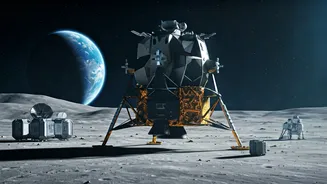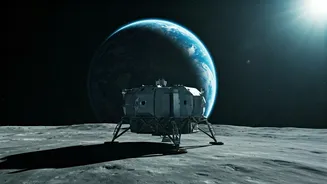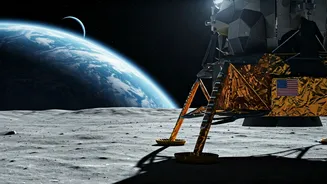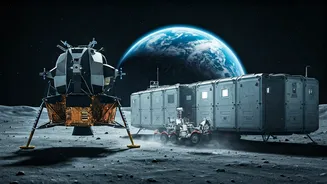







The Lunar Grand Design
Nasa is meticulously crafting a vision for sustained human habitation on the Moon, a monumental undertaking detailed in its 'Moon Base User's Guide'. This
comprehensive roadmap envisions a staggering 73 separate missions to the lunar surface, serving as the foundational steps toward constructing a self-sufficient outpost. The guide not only articulates the sheer scale of this endeavor but also candidly addresses the significant technological and financial obstacles that must be overcome. Published recently, this nine-page document meticulously identifies the critical technical and operational gaps that Nasa must bridge to transform this ambitious dream into a tangible reality. The agency foresees a dramatic acceleration in lunar exploration, commencing with a concentrated series of robotic and uncrewed landings designed to prepare the lunar terrain for subsequent human activity. Specifically, within the initial three-year period of this initiative, Nasa is targeting no fewer than 21 distinct landings to ready the Moon for future explorers. The overarching objective is to support a lunar base projected to cost $20 billion and to facilitate the inaugural crewed missions by the year 2028, aligning with broader aspirations for interplanetary travel, including the development of advanced nuclear propulsion for Mars missions. While recent successes, such as the Artemis II crewed lunar flyby, signify progress, Nasa acknowledges that numerous essential systems are still in formative stages of development, underscoring the complexity of the mission.
Phased Lunar Construction
Nasa's strategy for building a lunar base is thoughtfully divided into three progressive phases, each escalating in complexity and ambition. Phase 1, slated to extend through 2029, encompasses a substantial 25 launches and 21 landings. The primary focus of this initial stage is to guarantee reliable access to the Moon and to rigorously test and validate the various critical systems required for lunar operations. Following this, Phase 2, scheduled from 2029 to 2032, will involve 27 launches and an additional 24 landings. During this phase, Nasa plans to initiate intermittent crewed missions, marking a significant step towards sustained human presence. The culmination of this phased approach is Phase 3, which will concentrate on actively maintaining a continuous human presence on the Moon. This ultimate phase will necessitate an increased tempo of launches and landings, alongside the crucial development and implementation of sophisticated cargo-return systems. The chosen location for this proposed base is in proximity to the Moon’s south pole, a region that presents unique environmental challenges distinct from those encountered during the Apollo era missions. These challenges include the perpetual low angle of the Sun, which can lead to extended periods of deep shadow, potentially limiting solar power generation. Furthermore, the region experiences extreme cold spots and prolonged durations of darkness, necessitating innovative solutions for energy production, such as enhanced solar panel technology or the utilization of nuclear energy sources.
Technological Frontiers Ahead
The realization of a permanent lunar base hinges on addressing several critical technology gaps, as highlighted in Nasa’s guiding document. Essential systems for precise landing maneuvers, coupled with robust hazard detection and avoidance capabilities, remain under significant development and require further refinement. Beyond the purely technical aspects of getting to and operating on the Moon, profound questions persist regarding the long-term viability of human life in such an environment. The pervasive lunar dust, the effects of reduced gravity, and exposure to cosmic radiation present a multitude of potential risks to astronaut health and safety. Consequently, the meticulous planning and development of advanced life support systems are paramount. Equally important are strategies for ensuring adequate nutrition and maintaining the physical well-being of inhabitants through specialized exercise regimes. These considerations are not merely afterthoughts but fundamental components that must be thoroughly addressed well in advance of any long-duration human missions.
The Race and Resources
Several external pressures are intensifying Nasa's timeline to achieve its lunar objectives. A significant factor is the growing ambition of other nations in space exploration. For instance, China has articulated its own objective to land astronauts on the Moon and establish a lunar base by the year 2030, creating a competitive dynamic. Compounding these geopolitical considerations, the financial outlay for the Artemis missions has already reached a substantial $100 billion, with further delays to original human landing target dates continuing to occur. Adding another layer of complexity, potential budget constraints loom, as proposals for significant reductions in Nasa's funding are currently under consideration. These combined pressures of international competition, escalating costs, schedule slippages, and potential fiscal austerity create a challenging environment for the sustained progress of Nasa's lunar base initiative.